Fundamentals of Mechanisms of Systems (block A) (since 2022-23)
Fundamentals of Mechanisms of Systems (block A) (since 2022-23)
1 YEAR
1 semester 6 CFU
Marco Ceccarelli A.Y. 2021-22 to 2024-25

A.Y. 2025-26 new name: 80300216 MECHANICS OF SYSTEMS FOR SIMULATIONS

Code: 803000062
SSD: ING-IND-13
(by Engineering Sciences)

OBJECTIVES

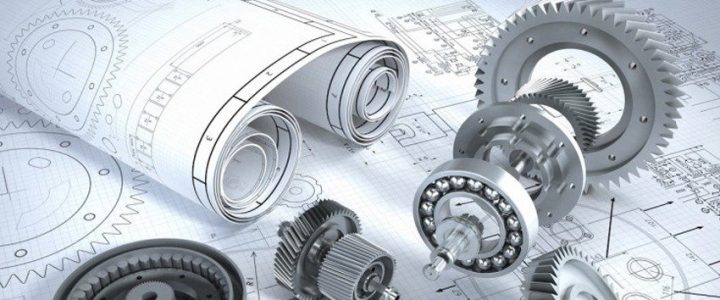
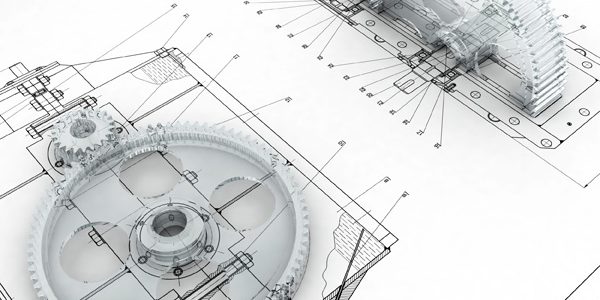
LEARNING OUTCOMES: The course aims to teach students the knowledge and tools that are needed to address the issues that are related to the identification, modeling, analysis, and design of multi-body planar systems in English language and terminology

KNOWLEDGE AND UNDERSTANDING: modeling and procedures to recognize the structure and characteristics of mechanisms and machines

APPLYING KNOWLEDGE AND UNDERSTANDING: acquisition of analysis procedures for the understanding of kinematic and dynamic characteristics of mechanisms and machines

MAKING JUDGEMENTS: possibility of judging the functionality of mechanisms and machines with their own qualitative and quantitative assessments

COMMUNICATION SKILLS: learning technical terminology and procedures for presenting the performance of mechanisms

LEARNING SKILLS: learning technical terminology and procedures for the presentation of the performance of mechanisms


PREREQUISITES: knowledge of basic mechanics of rigid bodies and computation skills

SYLLABUS

Structure and classification of planar mechanical systems, kinematic modeling, mobility analysis, graphical approaches of kinematics analysis, kinematic analysis with computer-oriented algorithms; dynamics and statics modeling, graphical approaches of dynamics analysis, dynamic analysis with computer-oriented algorithms, performance evaluation; elements of mechanical transmissions.

BOOKS:

Lopez-Cajùn C., Ceccarelli M., Mecanismos, Trillas, Città del Messico
Shigley J.E., Pennock G.R., Uicker J.J., “Theory of Machines and Mechanisms”, McGraw-Hill, New York
Handnotes and papers by the teachers

POWERTRAIN TECHNOLOGIES FOR FUTURE MOBILITY – 9 CFU
POWERTRAIN TECHNOLOGIES FOR FUTURE MOBILITY – 9 CFU
2 YEAR  II semester  9 CFU
Stefano CORDINER (6/9 cfu)
Lorenzo BARTOLUCCI (3/9 cfu)
A.Y. 2021-22

Internal Combustion Engines

Since A.Y. 2022-23 – program 📑

POWERTRAIN TECHNOLOGIES FOR FUTURE MOBILITY

Code: 80300079

80300077 M-6264
SSD: ING/IND/08
(by Mechanical Engineering)

PREREQUISITES: Technical Physics, Fluid Machinery

FORMATIVE OBJECTIVES

LEARNING OUTCOMES:

The course aims to provide students with in-depth scientific training to correctly address the problems of designing, choosing and managing new propulsion systems for sustainable mobility starting from current solutions with internal combustion engines as well as creating the conditions for the development of innovative and low environmental impact solutions. To this end, students will develop in-depth knowledge of the operating principles of propulsion systems for transport and will learn simulation procedures for their verification and sizing. Finally, particular attention is dedicated to the most recent technological development of internal combustion engine technology aimed at overcoming current limits in terms of emissions and efficiency and defining innovative scenarios for sustainable mobility.

KNOWLEDGE AND UNDERSTANDING:
Course aim is to provide the students with tools for the analysis of the performances and the evaluation of proper design solution for internal combustion engines and their core components. At the end of the course, the student will be able to independently understand the functional link between design variables and the performance of internal combustion engines also in case of innovative design,

APPLYING KNOWLEDGE AND UNDERSTANDING:
The course, through the analysis of specific problems and quantitative data, is aimed at providing the tools for analysis and evaluation of the effects of different design choices. The theme of energy efficiency and pollution reduction are at the heart of the teaching organization. The student will be able to interpret and propose design solutions, even innovative ones, adapted to the specificity of the problems that are presented to him.

MAKING JUDGEMENTS:
By studying theoretical and practical aspects of engine design and critically assessing the influence of different design variables, the student will be able to improve his judgment and proposal in relation to design. and the management of internal combustion engines.

COMMUNICATION SKILLS:
The presentation of the theoretical and application profiles underlying the operation of internal combustion engines will be carried out to allow the knowledge of the technical language of the appropriate specialist terminology; The development of communication skills, both oral and written will also be stimulated through classroom discussion, participation in seminary activities and through final tests.

LEARNING SKILLS:
The learning capacity, even individual, will be stimulated through numerical exercises, the drafting of papers on specialized topics, the discussion in the classroom, also aimed at verifying the actual understanding of the topics treated. The learning capacity will also be stimulated by integrative educational aids (journal articles and economic newspapers) in order to develop autonomous application capabilities.

SYLLABUS:

Legislation evolution on Internal Combustin Engines. Definition of the performance of the propulsion systems and their operating characteristics in relation to the mission, driving cycles. Generalities on reciprocating internal combustion engines: Characteristics and classification, thermodynamic and performance analysis of reciprocating internal combustion engines.
Air supply for 4-stroke engines: volumetric efficiency and its evaluation; Design elements of intake systems: quasi-stationary effects; valve sizing; influence of other engine parameters; Variable Valve Actuation systems. 2-stroke engines: construction schemes; Non-stationary phenomena in intake and exhaust ducts: inertia and wave propagation; variable geometry systems; calculation models; Supercharging.
In cylinder charge Motion: Turbulence; swirl, squish, tumble; stratified charge engines.
Traditional and alternative fuels; Properties of motor fuels. Generalities: combustibles; stoichiometric air; calorific value Gaseous fuels: natural gas, hydrogen and mixtures. bio-ethanol, bio-diesel and DME. Characteristics and their use in engines: technical solutions, performance and emissions.
Fuel supply Premixed combustion engines; Non-pre-mixed combustion engines.
Combustion : Analytical elements of combustion; thermodynamics of combustion processes; calculation of the chemical composition and of the adiabatic equilibrium temperature ; transport phenomena ; chemical kinetics.
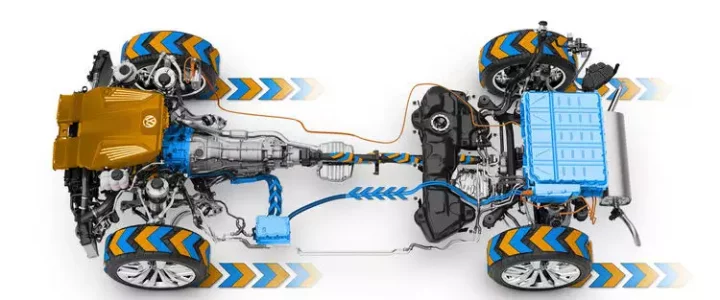
Pollutant emissions and abatement systems; Emissions: formation mechanisms, effects on health and the environment, measurement of emissions; influence of engine parameters; Innovative combustion solutions, Advanced Thermodynamic Cycles. Sustainable mobility. Operating principles of hybrid vehicles: series and parallel solution; motors a.c. and electrical employees; regenerative braking; lithium batteries, performance and prospects. Plug-in hybrid vehicles, i.c. engines “range extender”. Innovative control logics for optimal powersplitting between the different energy sources. Electric vehicles, characteristics and prospects. Numerical simulation tools will be presented for all course topics

ATTENDANCE

Course attendance is strongly recommended. During the course, students are invited to interact with the Professor during the class or office hours for any clarification or insight in specific topics related to the program.

Digital Signal Processing – 6 CFU (optC1.b/optC2.b)

Digital Signal Processing – 6 CFU (optC1.b/optC2.b)
1 YEAR II semester  6 CFU
ICT and Internet Engineering
Marina RUGGIERI (5cfu)

Tommaso ROSSI (1cfu)

A.Y. 2023-24
A.Y. 2024-25
All study programmes and syllabi 📑

 
Code: 8039514
SSD: ING-INF/03

The Digital Signal Processing teaching modules offer students the opportunity to become designers, providing a solid theoretical basis, multiple design techniques, and Matlab script development skills.

DSP is offered to Mechatronics students with the option of 6 credits and 9 credits format. Students who select the 6-credit option, might be interested to add a +3 credits of formative activities, with focus on pre-assigned additional topics of the DSP realm.

Thermodynamics and Heat Transfer (block A)
Thermodynamics and Heat Transfer (block A)
1 YEAR II semester  6 CFU
Michela GELFUSA A.Y. 2021-22 (by Engineering Sciences)

A.Y. 2024-25 (last year)

Code: 80300063
SSD: ING-IND/10
(by Engineering Sciences)
  • Prerequisites: Knowledge of basic notions from physics courses, above all physical quantities, units of measurement, fundamental laws of mechanics, optics and electromagnetism.
  • Objectives:
  • LEARNING OUTCOMES: The course aims to provide students with the basic principles, physical laws, and applications of thermodynamics and heat transfer, with the dual purpose of preparing them to afford more applicative courses, and use the acquired knowledge for design and sizing simple components and thermal systems.
  • KNOWLEDGE AND UNDERSTANDING: Students will have to understand the laws of applied thermodynamics and heat transfer, and understand the structure and operation of simplest components and systems. They will also demonstrate that they have acquired the basic methodologies for verifying and designing the studied devices.
  • APPLYING KNOWLEDGE AND UNDERSTANDING: Students should be able to size and/or verify simple components and systems, such as, for example engine systems.
  • MAKING JUDGEMENTS: Students will have to acquire the autonomous ability to face subsequent studies for which this course is preparatory, and to draw up simple projects of thermal systems that use the components studied. They will also have to be able to evaluate projects drawn up by other parties, checking that the project specifications are respected. COMMUNICATION SKILLS: Students must be able to illustrate in a complete and exhaustive way the acquired information, the results of their study and of their project activity, also through the normally used means of communication (discussion of the results obtained, report on the performed activity, Power Point presentations, etc.).
  • LEARNING SKILLS: Students must be able to apply the physical laws underlying the studied phenomena, and to face further studies that use the acquired knowledge. They will have to be able to expand the already owned information through the analysis of technical-scientific literature, and to modify their curricula choosing future knowledge to be acquired on the base of their knowledge and tendency.


Mechanics of Materials and Structures – 6 CFU (block A-E)

Mechanics of Materials and Structures – 6 CFU (block A-E)
1 YEAR II semester  6 CFU
Andrea Micheletti

Edoardo Artioli

A.Y. 2021-22 (9 cfu)
Andrea Micheletti A.Y. 2022-23
A.Y. 2024-25 (6 cfu) – program 📑
Code: 80300064
SSD: ICAR/08
(by Engineering Sciences)

FORMATIVE OBJECTIVES

LEARNING OUTCOMES: The goal of this course, composed of two Modules, is to provide the student with basic knowledge of the mechanics of linearly elastic structures and of the strength of materials. By completing this class successfully, the student will be able to compute simple structural elements and reasonably complex structures.

KNOWLEDGE AND UNDERSTANDING: At the end of this course, the student will be able to:
– compute constraint reactions and internal actions in rigid-body systems and beams subjected to point/distributed forces and couples
– compute centroid position and central principal second-order moments of area distributions
– understand the formal structure of the theory of linear elasticity for beams and 3D bodies
– analyze strain and stress states in 3D bodies
– compute the stress state in beams subjected to uniaxial bending, biaxial bending, eccentric axial force
– understand the behaviour of beams subjected to shear with bending and torsion
– understand how to compute displacements/rotations in isostatic beam systems, how to solve statically underdetermined systems, how to apply yield criteria, and how to design beams against buckling

APPLYING KNOWLEDGE AND UNDERSTANDING: The student will apply the knowledge and understanding skills developed during the course to the analysis of practical problems. This includes the analysis of linearly elastic structures and structural members in terms of strength and stiffness.

MAKING JUDGEMENTS: The student will have to demonstrate his awareness of the modeling assumptions useful to describe and calculate structural elements, as well as his critical judgement on the static response of elastic structures under loads, in terms of stresses, strains, and displacements.

COMMUNICATION SKILLS: The student will demonstrate, mostly during the oral test, his capacity of analyzing and computing the static response of linearly elastic structures, as well as his knowledge of the underlying theoretical models.

LEARNING SKILLS: The student will get familiar with the modeling of structures and structural elements in practical problems, mostly during the development of his skills for the written test. This mainly concerns beams and three-dimensional bodies.

PREREQUISITES: The student should have already attended the basic courses of calculus, geometry, and physics.
It is required that the student has good skills with regard to differential and integral calculus, linear algebra and matrix calculations.

SYLLABUS:

Together with the other Module of this course, the following topics are covered.

Review of basic notions of vector and tensor algebra and calculus.
Kinematics and statics of rigid-body systems.
Geometry of area distributions.
Strain and stress in 3D continuous bodies and beam-like bodies.
Virtual power and virtual work equation for beams and 3D bodies.
One-dimensional beam models: Bernoulli-Navier model, Timoshenko model, constitutive equations, governing differential equations.
Constitutive equation for linearly elastic and isotropic bodies, material moduli.
Hypothesis in linear elasticity, equilibrium problem for linearly elastic beams and 3D bodies.
Three-dimensional beam model: the Saint-Venant problem, uniaxial and biaxial bending, eccentric axial force, shear and bending, torsion.
Elastic energy of beams and 3D bodies, work-energy theorem, Betti’s reciprocal theorem, Castigliano’s theorem.
Yield criteria (maximum normal stress, maximum tangential stress, maximum elastic energy, maximum distortion energy).
Buckling instability, bifurcation diagrams, load and geometry imperfections, Euler buckling load, design against buckling.
Basic notions on the finite element method and structural analysis software.

Analogue Electronics – 9 CFU (block B-opt)

Analogue Electronics – 9 CFU (block B-opt)
1 YEAR II semester  6 CFU + 3 cfu extra
Rocco Giofre’ A.Y. 2021-22

A.Y. 2022-23

Paolo Colantonio A.Y. 2023-24

All study programmes and syllabi 📑

Code: 8037954 (9CFU)
80300060 (6CFU)

SSD: ING-INF/01
(by Engineering Sciences)

Students who include Analogue Electronics in their study plan are strongly advised to take it in its 9-CFU version, with the last 3 CFUs (out of 9) serving as Extra Credits.


NANOTECHNOLOGY – 6 CFU

NANOTECHNOLOGY – 6 CFU
1 YEAR II semester  6 CFU
Antonio Agresti (3cfu)
Francesca De Rossi (3cfu)
A.Y. 2021-22
Antonio Agresti (3cfu)
Fabio Matteocci (3cfu)
A.Y. 2022-23
A.Y. 2023-24
Antonio Agresti (5cfu)

Sara Pescetelli (1cfu)

A.Y. 2024-25
A.Y. 2025-26 – program 📑
Code: 8039791
SSD: ING-INF/01