-
Open Firefox
-
Go to Menu (☰) → Settings → Applications
-
In the search bar, type PDF
-
Look for Portable Document Format (PDF)
-
Change the action from Open in Firefox to Use Adobe Acrobat Reader
-
-
Close the settings tab.
Author: Simona Ranieri
Job Opportunities

Digital Signal Processing – 6 CFU (optC1.b/optC2.b) A.Y. 2025-26

“The Digital Signal Processing teaching modules offer students the opportunity to become designer providing a solid theoretical basis, multiple design techniques and Matlab script development skills.
DSP is offered to Mechatronics students with the option of 6 credits and 9 credits format. Students that select the 6-credit option, might be interested to add a +3 credits of formative activities, with focus on pre-assigned additional topics of the DSP realm.”
Prof. Marina Ruggieri
NEW STUDENTS A.Y. 2025-26 JOIN THE CHANNEL

Welcome to Tor Vergata!
Our Didactic Organization is delivered in person only. Online attendance is not available, as our programs are designed to ensure full on-campus participation and interaction.
Students who are behind on their visa application process are advised to contact the professors of their first year on the basis of their study plan. In order to join the class online to take the programs of the 1st year, you need to request a temporary MS Teams account as a student of Tor Vergata. Please read all the following information:
Students are requested to join the 1st-year channel.
STUDENTS class A.Y. 2025-26 Mechatronics | MECHATRONICS | Microsoft Teams
This channel is managed by the Management Office of Mechatronics Engineering (Simona Ranieri)
Call for applications for a grant to cover housing costs incurred by out-of-town students for the year 2025

At the University of Rome Tor Vergata, pursuant to Article 1, paragraphs 526 and 527 of Budget Law No. 178 of December 30, 2020, Article 6, paragraphs 1-bis and 1-ter of Legislative Decree No. 45 of April 7, 2025, converted into Law No. 79 of June 5, 2025, and MUR Decree No. 630 of September 10, 2025, a call for applications is being announced to identify non-resident students eligible to receive a contribution towards housing rental costs incurred during the year 2025. (…)
Digital Modeling of Energy Conversion 9 – Block A-B

Good morning,
we have just started our course on “Digital Modeling of Energy Conversion” to be taught for 1st yr mechatronics engineering students within the tracks “electronics for digital transition” and “mechanics for digital transition”.
Please join the team on MS-teams named “MULONE-80300269-DIGITAL_MODELING_OF_ENERGY_CONVERSION”, where you can find the introductory slides to the course uploaded in the “File” section of the channel “Lezioni”.
MS TEAMS code: eqd19lf
Refer to us for any questions you should have. The next class is next Wednesday at 9:30 in room B16.
Rome, 22/09/2025
Best regards
Vincenzo Mulone and Pietro Mele
Call for teachers in “Mechatronics Engineering”

Students Welcome 2025

A traditional event dedicated to welcoming and orientation activities for all new students arriving at Tor Vergata University of Rome.
We are very happy to announce that the Students Welcome 2025 will be held in presence!
The Students Welcome is a traditional event taking place the first weeks of the new academic year dedicated to welcoming and orientation activities for all new students arriving at Tor Vergata University of Rome.
https://web.uniroma2.it/en/contenuto/students_welcome
Event Info
Dates:
From the 11th to the 19th of September 2025 &
From the 29th of September to the 3rd of October 2024
Time: Monday to Friday 9:30 to 13:30
Address:
Tor Vergata University Rectorate / Faculty of Law
Building B, Floor 0
Via Cracovia 50, 00133 Roma (Google Maps)
Contacts:
For further info contact the Welcome Office
World’s 2% Top Scientists

Engineering Tor Vergata
Renato Baciocchi, Giuseppe Bianchi, Marco Evangelos Biancolini, Stefano Bifaretti, Paolo Bisegna, Thomas M Brown, Valeria Cardellini, Marco Ceccarelli, Antonio Comi, Arnaldo D’Amico, (†2020) Matthias Auf der Maur, Aldo Di Carlo, Corrado Di Natale, Luca Chiaraviglio, Paolo Ferrazzoli, Fabio Gori, Vincenzo Grassi, Ernesto Limiti, Francesco Lo Presti, Riccardo Marino, Gaetano Marrocco, Franco Mazzenga, Alberto Meda, Benedetto Nastasi, Nicola A Nodargi, Ettore Pennestrì, Paolo Prosposito, Matteo Russo, Giovanni Saggio, Ali Sohani, Patrizio Tomei, Antonio Tornambè, Giuseppe Vairo, Pier Paolo Valentini, Cristiano Maria Verrelli, Fabio Massimo Zanzotto.
In bold, all the Professors of Mechatronics Engineering.
https://web.uniroma2.it/contenuto/pubblicata-la-nuova-classifica-dei-worlds-2-top-scientists
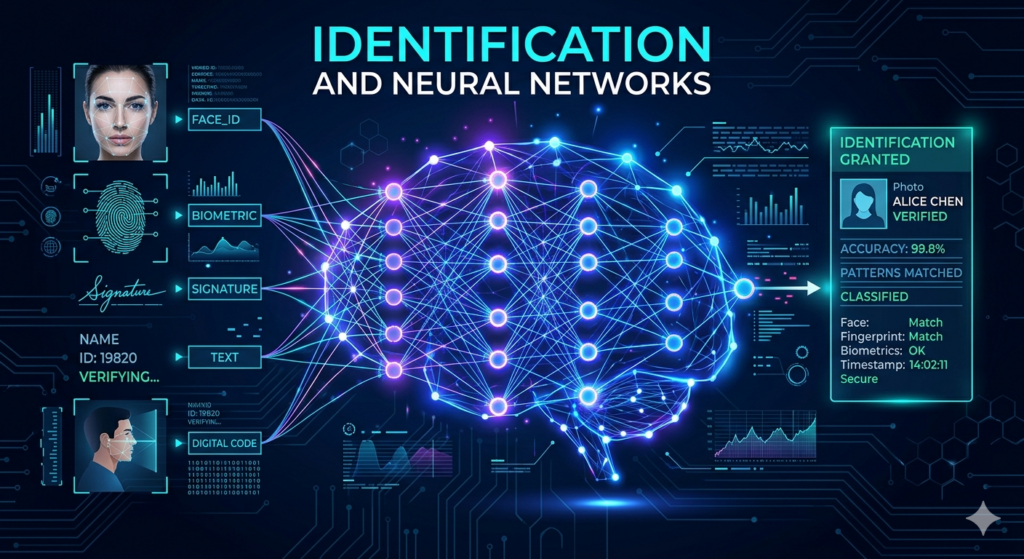
Identification and Neural Networks – 6 CFU (since 24-25)

| 2 YEAR | II semester | 6 CFU |
| Patrizio Tomei (4cfu) Eugenio Martinelli (2cfu) |
A.Y. 2023-24 ex Adaptive Systems (block C-opt) |
| Giovanni Luca SANTOSUOSSO | A.Y. 2024-25 not been activated |
| A.Y. 2025-26 (new name “Identification and Neural Networks” |
|
| Didatticaweb | |
| Code: 80300088 SSD: ING-INF/04 |
Pre-requirement: The basics of systems theory and control are required.
LEARNING OUTCOMES: The course aims to provide the basic techniques for the design of predictors, filters, and adaptive controllers.
KNOWLEDGE AND UNDERSTANDING: Students must obtain a detailed understanding of design techniques with the help of MATLAB-SIMULINK to solve industrial problems of adaptive filtering, adaptive prediction, and adaptive control.
APPLYING KNOWLEDGE AND UNDERSTANDING: Students must be able to apply the project techniques learned in the course even in different industrial situations than those examined in the various phases of the course.
MAKING JUDGEMENTS: Students must be able to apply the appropriate design technique to the specific cases examined, choosing the most effective algorithms.
COMMUNICATION SKILLS: Students must be able to communicate using the terminology used for filtering, prediction, and adaptive control. They must also be able to provide logical and progressive exposures starting from the basics, from structural properties, from modeling to the design of algorithms, without requiring particular prerequisites. Students are believed to be able to understand the main results of a technical publication on the course topics. Guided individual projects (which include the use of Matlab-Simulink) require assiduous participation and exchange of ideas.
LEARNING SKILLS: Students must be able to identify the appropriate techniques and algorithms in real cases that arise in industrial applications. Furthermore, it is believed that students have the ability to modify the algorithms learned during the course in order to adapt them to particular situations under consideration.
Texts
Adaptive Filtering Prediction and Control, Graham C. Goodwin, Kwai Sang Sin, Dover Publications, 2009.
UNIVERSITA' DEGLI STUDI ROMA "TOR VERGATA"