 UNIVERSITA' DEGLI STUDI ROMA "TOR VERGATA"
Matrice di Tuning


| block optD – COMPUTATIONAL METHODS |
| 2nd Year | II semester |
| Course Information | |
|---|---|
| Course Code | 80300242 |
| Credits | 6 CFU |
| Offered by | Electronic Engineering |
| SSD2015 | ING-INF/01 |
| SSD2024 | |
| note |
Active since A.Y. 2025/26 PREREQUISITES: Basic concepts of Linear Algebra, Mathematical Analysis and Python Programming |
| Lecturer | |
|---|---|
 |
Current Lecturer
Prof. Fausto SARGENI
Prof. Matthias AUF DER MAUR
Prof. Aldo DI CARLO
Andrea SALAMON
✉
☏ +39-06-7259.
|
|
Previous Lecturer
✉
|
|
| Grading Criteria | |
|---|---|
| Evaluation | Oral exam |
| Resources | |
|---|---|
| Links |
|

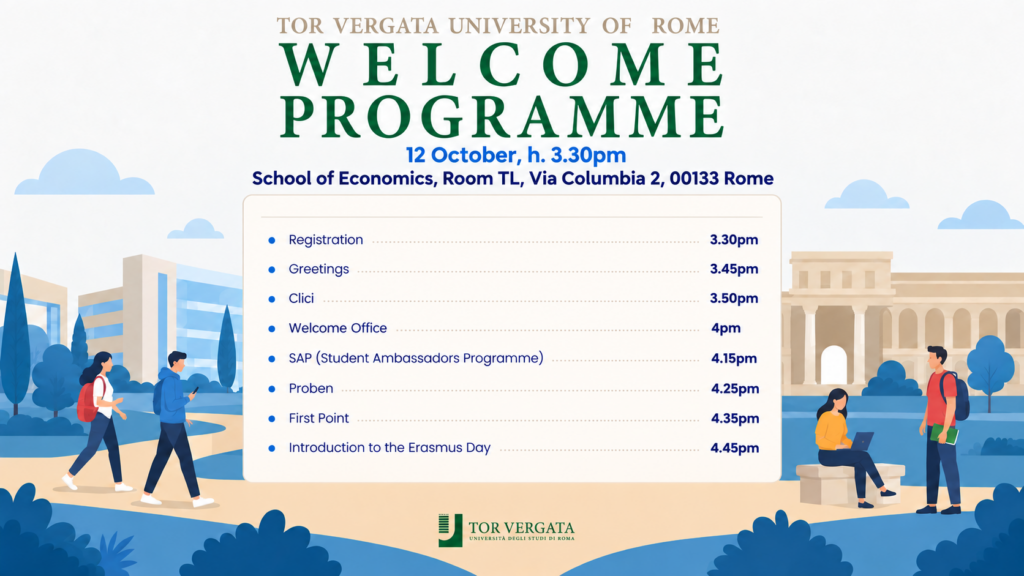 📢 Welcome Event for Freshmen / Enrolled Students – Second Session
As previously announced, a second welcome event for newly enrolled students will take place this month!
🗓 Date: October 12
⏰ Time: Starting at 15:30 (3:30 PM)
📍 Location: School of Economics, Room TL
This session will immediately precede the Erasmus Day event, which will be held in the same location starting at 17:00 (5:00 PM).
ℹ️ Note: A third event is scheduled for November (exact date TBD) to welcome late-arriving Non-EU students with the same format.


| block optD – COMPUTATIONAL METHODS |
| 2nd Year | II semester |
| Course Information | |
|---|---|
| Course Code | 80300140 |
| Credits | 6 CFU |
| Offered by | https://www.master-mass.eu/ (from Physics LM-17 ) |
| SSD2015 | FIS/01 |
| SSD2024 | PHYS-01/A |
| note |
|
| Lecturer | |
|---|---|
 |
Current Lecturer
Prof. Michele BUZZICOTTI
☏ +39-06-7259-4584
|
|
Previous Lecturer
✉
|
|
| Grading Criteria | |
|---|---|
| Evaluation | Oral exam |
| Resources | |
|---|---|
| Links |
|


| block optC2.a – MECHATRONICS SYSTEMS AND ICT – Interconnected Electric Vehicle Engineering |
| 2nd Year | II semester |
| Course Information | |
|---|---|
| Course Code | |
| Credits | 6 CFU |
| Offered by | ICT and Internet Engineering |
| SSD2015 | ING-INF/03 |
| SSD2024 | IINF-03/A |
| note | |
| Lecturer | |
|---|---|
 |
Current Lecturer
Prof. Mauro Leonardi
✉ mauro.leonardi@uniroma2.it
☏ 06. 7259.7328
|
|
Previous Lecturer
Prof.
✉
|
|
| Grading Criteria | |
|---|---|
| Evaluation | Written Examination
Oral examination |
| Resources | |
|---|---|
| Links |
|

| block optC1.b – MECHATRONICS SYSTEMS AND ICT – Learning and Communication |
| 2nd Year | II semester |
| Course Information | |
|---|---|
| Course Code | |
| Credits | 6 CFU |
| Offered by | ICT and Internet Engineering |
| SSD2015 | ING-INF/01 |
| SSD2024 | IINF-01/A |
| note | A.Y. 2024-25 new |
| Lecturer | |
|---|---|
 |
Current Lecturer
Prof. Eugenio Martinelli
✉
☏ 06. 7259.7259
Dept. of Electronic Engineering
|
|
Previous Lecturer
✉
|
|
| Grading Criteria | |
|---|---|
| Evaluation | |
| Resources | |
|---|---|
| Links |
|
| block A – MECHANICS AND DIGITAL TRANSITION |
| 2nd Year | II semester |
| Course Information | |
|---|---|
| Course Code | 80300065 |
| Credits | 6 CFU |
| Offered by | Engineering Sciences |
| SSD2015 | ING-IND/14 |
| SSD2024 | IIND-03/A |
| note | |
| Lecturer | |
|---|---|
 |
Current Lecturer
Prof. Luciano Cantone
✉
☏ 06. 7259.
Dept. of Industrial Engineering
(since A.Y. 2018-19)
|
|
Previous Lecturer
Prof.
✉
|
|
| Grading Criteria | |
|---|---|
| Evaluation | Written exam
Oral exam Mid-term assessment |
| Resources | |
|---|---|
| Links |
|
| ALL BLOCKS |
| 2nd Year | II semester |
| Course Information | |
|---|---|
| Course Code | 8039781 |
| Credits | 9 CFU |
| Offered by | Mechanical Engineering |
| SSD2015 | ING/INF/01 |
| SSD2024 | IINF-01/A |
| note | A.Y. 2022-23 1st Year I semester A.Y. 2023-24 (NOT HELD) |
| Lecturer | |
|---|---|
 |
Current Lecturer
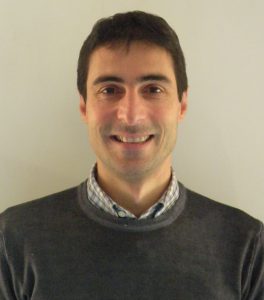
Prof. Stefano Bifaretti
✉ stefano.bifaretti@uniroma2.it
☏ +39 06. 7259.
Dept. Industrial Engineering
Prof.
since A.Y. 2021-22
|
|
Previous Lecturer
Stefano Bifaretti (7 cfu) + Cristina Terlizzi (2 cfu) A.Y. 2022-23 A.Y. 2024-25
|
|
| Grading Criteria | |
|---|---|
| Evaluation | Oral exam
Project assessment |
| Resources | |
|---|---|
| Links |
|

| ALL BLOCKS |
| 2nd Year | II semester |
| Course Information | |
|---|---|
| Course Code | 80300077 M-6264 |
| Credits | 9 CFU |
| Offered by | Mechanical Engineering |
| SSD2015 | ING/IND/08 |
| SSD2024 | IIND-06/A |
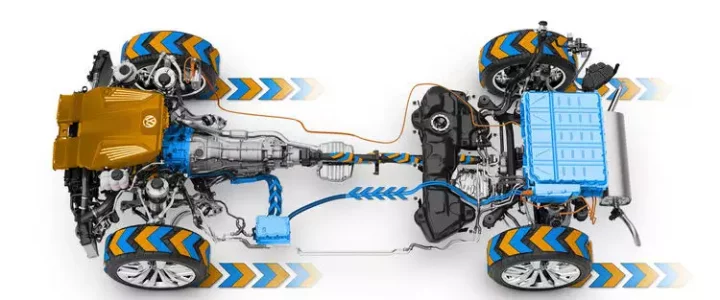
| note | Since A.Y. 2022-23 POWERTRAIN TECHNOLOGIES FOR FUTURE MOBILITY
A.Y. 2021-22 ex. Internal Combustion Engines |
| Lecturer | |
|---|---|
 |
Current Lecturer
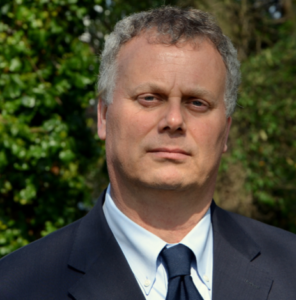
Prof. Stefano CORDINER (6/9 cfu)
✉ @uniroma2.it
☏ +39 06. 7259.
Dept. Industrial Engineering
Prof. Lorenzo BARTOLUCCI (3/9 cfu)
since
|
|
Previous Lecturer
|
|
| Grading Criteria | |
|---|---|
| Evaluation | Written exam
Ongoing assessment Project assessment |
| Resources | |
|---|---|
| Links |
|
 Course Syllabus (details):