Identification and Neural Networks – 6 CFU (since 24-25)

Identification and Neural Networks – 6 CFU (since 24-25)
2 YEAR II semester  6 CFU
Patrizio Tomei (4cfu)
Eugenio Martinelli (2cfu)
A.Y. 2023-24 ex Adaptive Systems (block C-opt) 
Giovanni Luca SANTOSUOSSO A.Y. 2024-25 not been activated
A.Y. 2025-26
(new name “Identification and Neural Networks”
Didatticaweb
Syllabus📑

Code: 80300088
SSD: ING-INF/04


Quantum Computing (D-opt)

Mathematical-Methods
2 YEAR (Block D)
2 semester 8 CFU
(from Physics LM-17 )
Prof.  A.Y. 2025-26 activated
start in the a.y. 2026-27
Code: 80300140
SSD: FIS/01
https://www.master-mass.eu/


  • PREREQUISITES: Basic concepts of Linear Algebra, Mathematical Analysis and Python Programming
  • OBJECTIVE: The lectures are thought to give a solid knowledge of the theoretical Machine Learning (ML) background. A special focus is given to the ML application for data analysis of physical systems. The students will also learn how to implement a typical ML model using the standard libraries in a Python environment.


Digital Signal Processing – 9 CFU (optC1.b/optC2.b)

Digital Signal Processing – 9 CFU (optC1.b/optC2.b)
1 YEAR II semester  9 CFU
ICT and Internet Engineering
Marina RUGGIERI (cfu)

Tommaso ROSSI (cfu)

A.Y. 2025-26 

Syllabus📑

Code: 80300072
SSD: ING-INF/03

The Digital Signal Processing teaching modules offer students the opportunity to become designers, providing a solid theoretical basis, multiple design techniques and Matlab script development skills.

DSP is offered to Mechatronics students with the option of 6 credits and 9 credits format. Students who select the 6-credit option might be interested in adding 3 credits of formative activities, with a focus on pre-assigned additional topics in the DSP realm.


Digital Modeling of Energy Conversion – 6 CFU (block A-B) (since 2025-26)

Digital Modeling of Energy Conversion – 6 CFU (block A-B) (since 2025-26)
1 YEAR
1 semester 6 CFU
Vincenzo MULONE (3cfu)

Pietro MELE (3cfu)

A.Y. 2025-26
didatticaweb
Syllabus📑

Code:
SSD: ING-IND-08
(by Mechatronics Engineering)

Digital Modeling of Energy Conversion 9 – Block A-B

Mechanics of Systems for Simulations – 6 CFU (block A-B) (since 2025-26)

Mechanics of Systems for Simulations – 6 CFU (block A-B) (since 2025-26)
1 YEAR
1 semester 6 CFU
(ex FUNDAMENTALS OF MECHANICS OF SYSTEMS)
Marco Ceccarelli A.Y. 2025-26 program 📑
Code: 80300216 
SSD: ING-IND-13
(by Engineering Sciences)


PREREQUISITES: knowledge of basic mechanics of rigid bodies and computation skills

SYLLABUS

Structure and classification of planar mechanical systems, kinematic modelling, mobility analysis, graphical approaches of kinematics analysis, kinematic analysis with computer-oriented algorithms, dynamics and statics modelling, graphical approaches of dynamics analysis, dynamic analysis with computer-oriented algorithms, performance evaluation, elements of mechanical transmissions.

BOOKS:

Lopez-Cajùn C., Ceccarelli M., Mecanismos, Trillas, Città del Messico
Shigley J.E., Pennock G.R., Uicker J.J., “Theory of Machines and Mechanisms”, McGraw-Hill, New York
Handnotes and papers by the teachers

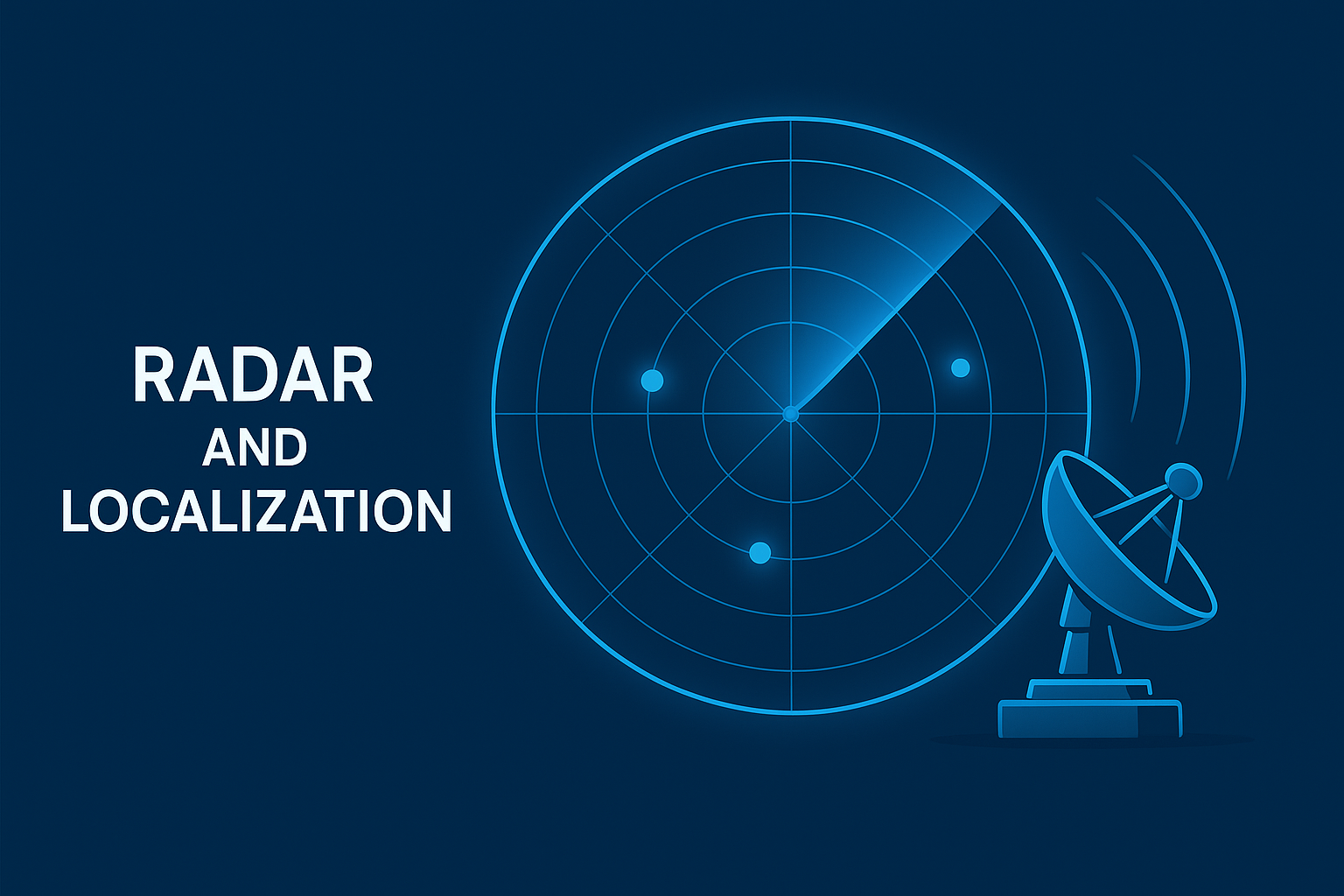
Radar and Localization – 6 CFU (optC2.a)

Radar and Localization – 6 CFU (optC2.a)
2 YEAR II semester 6 CFU
Prof. Mauro Leonardi A.Y. 2025-26


(By ICT)
Code: 80300159
SSD: ING-INF/03

LEARNING OUTCOMES: Knowledge of the main applications and operations of radar systems with the necessary basic elements (both theoretical and technical-operational).

KNOWLEDGE AND UNDERSTANDING: Being aware, at the system level, performance in terms of scope, discrimination, ambiguity, Doppler filtering

APPLYING KNOWLEDGE AND UNDERSTANDING: knowing how to deal with new problems with the methods learned

MAKING JUDGEMENTS: the ability to choose among the various methods learned the proper one to face new problems and radar design.

Syllabus – Radar Systems

1. Fundamentals

  • General information on radar.

  • Spectrum usage.

  • Radar measurements:

    • Distance.

    • Radial velocity.

    • Angular location.

2. Radar Equation and Propagation

  • Fundamental radar equation.

  • Receiver and antenna noise.

  • Propagation: attenuation and reflections.

  • Losses.

3. Radar Cross Section and Target Models

  • Radar Cross Section (RCS).

  • Target fluctuation models:

    • Slow fluctuation.

    • Rapid fluctuation.

4. Target Detection

  • Detection of fixed targets.

  • Detection of moving targets.

  • Pulse integration.

5. Decision Theory and Radar Detection

  • Decision criteria.

  • Detection with a single pulse.

  • Detection with N pulses.

6. Radar Types

  • Pulsed radar.

  • Continuous Wave (CW) radar.

  • Frequency Modulated Continuous Wave (FMCW) radar.

  • Automotive radar.

MACHINE LEARNING METHODS FOR PHYSICS – 8 CFU (D-opt)

Mathematical-Methods
2 YEAR (Block D)
2 semester 8 CFU
(from Physics LM-17 )
Prof. Michele BUZZICOTTI A.Y. 2025-26 program 📑
Code: 80300140
SSD: FIS/01
https://www.master-mass.eu/


  • PREREQUISITES: Basic concepts of Linear Algebra, Mathematical Analysis and Python Programming
  • OBJECTIVE: The lectures are thought to give a solid knowledge of the theoretical Machine Learning (ML) background. A special focus is given to the ML application for data analysis of physical systems. The students will also learn how to implement a typical ML model using the standard libraries in a Python environment.


COMPUTER VISION – 6 CFU (since 2024-25)

COMPUTER VISION – 6 CFU (since 2024-25)
2 YEAR II semester  6 CFU
Arianna Mencattini A.Y. 2023-24 (ex MEASUREMENT SYSTEMS FOR MECHATRONICS)

A.Y. 2024-25: Computer Vision

didatticaweb
Syllabus📑

Code: 8039787
SSD: ING/INF/07

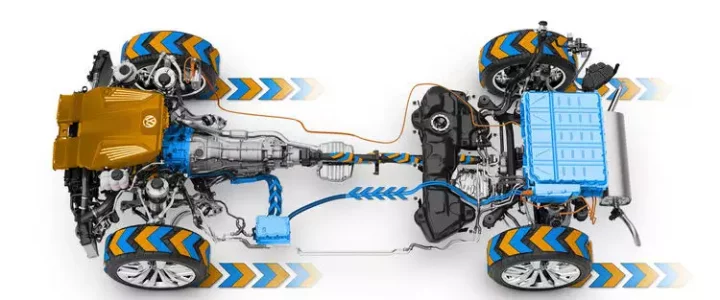
INTEGRATED SOLUTIONS FOR SUSTAINABLE MOBILITY AND ENERGY PRODUCTION – 6 CFU (C2)

CEM
PROFESSOR 1st Year – II semester 6 CFU
Lorenzo BARTOLUCCI (3 CFU)
Matteo BALDELLI (3 CFU)
since A.Y. 2024-25
👉(provided by Mechanical Engineering) 

 🧩 Block: B – Electronics

📌 Course Code: 80300136 (6CFU)

🏷 SSD2015: ING-IND/08
🏷 SSD2024:

📑 Grading criteria

https://t0.gstatic.com/faviconV2?client=SOCIAL&type=FAVICON&fallback_opts=TYPE,SIZE,URL&url=https://didatticaweb.uniroma2.it&size=32  DidatticaWeb

Syllabus

The course program includes the presentation and discussion of the following topics:

– Introduction to key energy carriers and the concept of sustainability

– Technologies for the production of energy carriers: electricity, hydrogen, biofuels

– Technological challenges in integrating these energy carriers into sustainable mobility

– The concept of digital twins and system optimization

– Development of a numerical-experimental project in mobility using one or more energy carriers