Students Welcome – 16 September 2026 h. 8:45 Engineering Macroarea, “Aula Convegni”


| ALL BLOCKS |
| 1st Year | I semester |
| Course Information | |
|---|---|
| Course Code | 8039927 |
| Credits | 9 CFU (8+1) |
| Offered by | Mechatronics Engineering |
| SSD2015 | ING-INF/01 |
| SSD2024 | IINF-01/A |
| note | A.Y. 2019–20: new course name – Integrated Sensors (formerly Electronic Devices and Sensors) |
| Lecturer | |
|---|---|
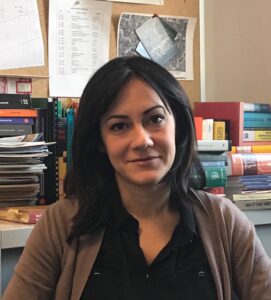
![]() |
Current Lecturer
Prof. Alexandro Catini
✉ catini@ing.uniroma2.it
☏ 06. 7259.7349
Prof. Corrado Di Natale
|
|
Previous Lecturer
Corrado Di Natale (9 cfu) 2019-20
|
|
| Grading Criteria | |
|---|---|
| Evaluation | written examination
|
| Resources | |
|---|---|
| Links |
|

| ALL BLOCKS |
| 1st Year | I semester |
| Course Information | |
|---|---|
| Course Code | 8039791 |
| Credits | 6 CFU (5+1) |
| Offered by | Mechatronics Engineering |
| SSD2015 | ING-INF/01 |
| SSD2024 | IINF-01/A |
| note | |
| Lecturer | |
|---|---|
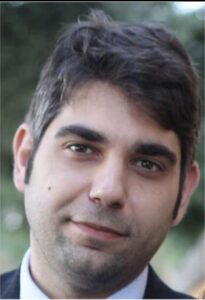
![]() |
Current Lecturer
Prof. Antonio Agresti
✉ antonio.agresti@uniroma2.it
☏ 06. 7259.7562
Dr Sara Pescetelli
since a.y. 2024-25
|
|
Previous Lecturer
Prof. Francesca De Rossi (3 CFU) 2021-22
Fabio Matteocci (3 CFU) 2022-23 to 2023-24
|
|
| Grading Criteria | |
|---|---|
| Evaluation | Oral examination |
| Resources | |
|---|---|
| Links |
|


| block A – MECHANICS AND DIGITAL TRANSITION |
| block B – ELECTRONICS AND DIGITAL TRANSITION |
| 1st Year | I semester |
| Course Information | |
|---|---|
| Course Code | 8037954 |
| Credits | 6 CFU (3+3) |
| Offered by | Mechatronics Engineering |
| SSD2015 | ING-IND/08 |
| SSD2024 | IIND-06/A |
| note |
|
| Grading Criteria | |
|---|---|
| Evaluation | Oral examination Practical examination |
| Resources | |
|---|---|
| Links |
|

| BLOCK: block B-opt – ELECTRONICS AND DIGITAL TRANSITION |
| 1st Year | II semester |
| Course Information | |
|---|---|
| Course Code | 8037954 |
| Credits | 6 + 3 CFU extra |
| Offered by | Engineering Sciences |
| SSD2015 | ING-INF/01 |
| SSD2024 | IINF-01/A |
| note | Students who include Analogue Electronics in their study plan are strongly advised to take it in its 9-CFU version, with the last 3 CFUs (out of 9) serving as Extra Credits. |
| Grading Criteria | |
|---|---|
| Evaluation | Written examination Oral examination |
| Resources | |
|---|---|
| Links |
|


The CLICI – Center for Italian Language and Culture of the University of Rome Tor Vergata offers Italian Language and Culture Courses for foreign students enrolled at the university as well as for external participants.
Please note: Participation in CLICI Italian Language and Culture Courses is highly encouraged; however, these courses are extracurricular and do not count towards the degree requirements or elective credits of the M.Sc. in Mechatronics Engineering.
http://clici.uniroma2.it/en/courses/courses-in-italian-language-for-tor-vergata-foreign-students/

The Master’s Degree Programme in Mechatronics Engineering at University of Rome Tor Vergata announces the exceptional reopening of admissions for the 3rd application window.
📅 Application period: 18 May 2026 – 25 May 2026
📅 Application period: 13 July 2026 – 17 July 2026
Applications are open for the following categories of candidates:
For admission procedures, requirements, and further information:
Mechatronics Engineering – University of Rome Tor Vergata

| 1 YEAR | II semester | 6 CFU |
| Cristiano M. VERRELLI | since 2017-18 since 2022-23 to 2024-25 (block B) since 2025-26 (block optE) |
| Cristiano M. VERRELLI (6) + Mohamed El Arayshi (integrative course) |
2025-26 |
| Cristiano M. VERRELLI | 2026-27 change name: Mathematics of Feedback Control |
|
The matrix exponential; the variation of constants formula.
Computation of the matrix exponential via eigenvalues and eigenvectors and via residual matrices. Necessary and sufficient conditions for exponential stability: Routh-Hurwitz criterion. Invariant subspaces.
Impulse responses, step responses and steady state responses to sinusoidal inputs. Transient behaviours. Modal analysis: mode excitation by initial conditions and by impulsive inputs; modal observability from output measurements; modes which are both excitable and observable. Popov conditions for modal excitability and observability. Autoregressive moving average (ARMA) models and transfer functions.
Kalman reachability conditions, gramian reachability matrices and the computation of input signals to drive the system between two given states. Kalman observability conditions, gramian observability matrices and the computation of initial conditions given input and output signals. Equivalence between Kalman and Popov conditions.
Kalman decomposition for non-reachable and non-observable systems.
Eigenvalues assignment by state feedback for reachable systems. Design of asymptotic observers and Kalman filters for state estimation of observable systems. Design of dynamic compensators to stabilize any reachable and observable system. Design of regulators to reject disturbances generated by linear exosystems.
Bode plots. Static gain, system gain and high-frequency gain.
Zero-pole cancellation.
| A.Y. | Mechatronics students | Other courses Students | Mechatronics average | Other courses average |
| 2019/2020 | 10 | 62 | 24 | 23 |
| 2020/2021 | 19 | 25 | 23 | 24 |
| 2021/2022 | 13 | 44 | 21 | 22 |