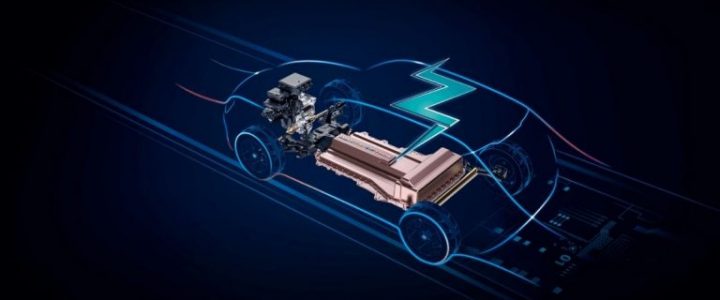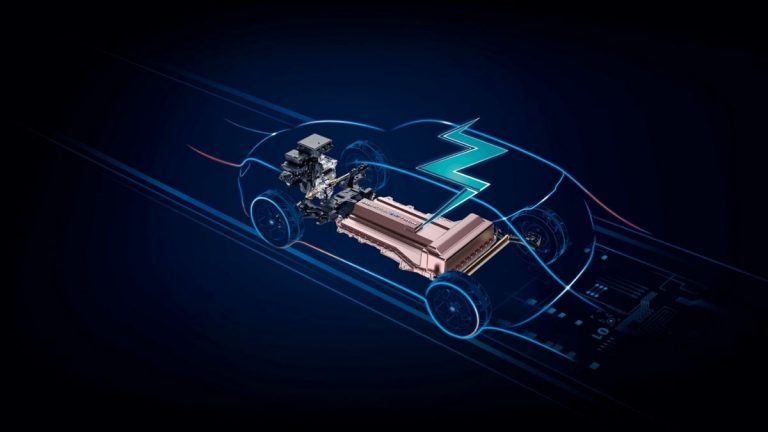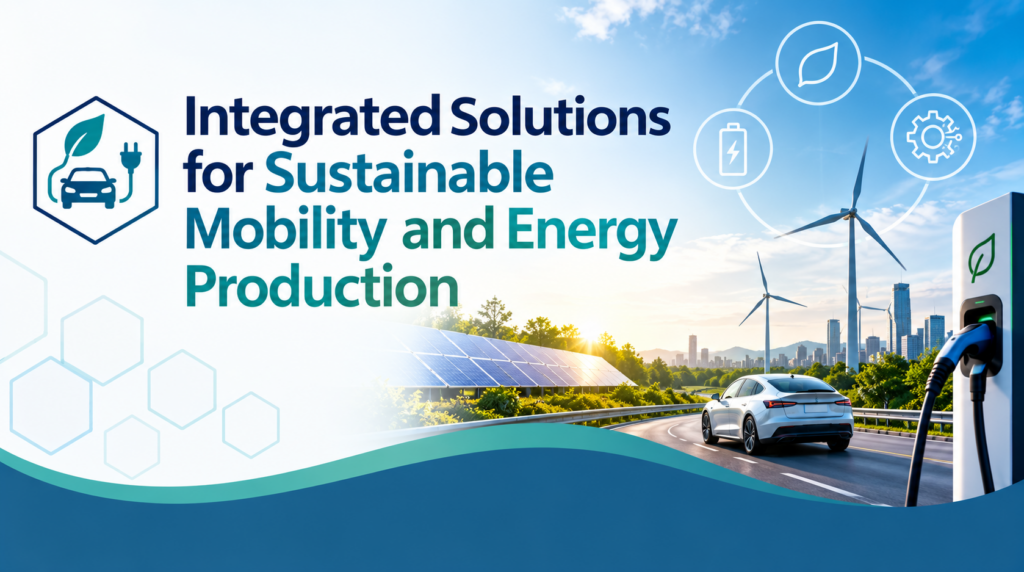
INTEGRATED SOLUTIONS FOR SUSTAINABLE MOBILITY AND ENERGY PRODUCTION – 6 CFU (C2)

CEM
PROFESSOR 1st Year – II semester 6 CFU
Lorenzo BARTOLUCCI (3 CFU)
Matteo BALDELLI (3 CFU)
since A.Y. 2024-25
👉(provided by Mechanical Engineering) 

 🧩 Block: C2 – INTERCONNECTED ELECTRIC VEHICLE ENGINEERING

📌 Course Code: 80300136 (6CFU)

🏷 SSD2015: ING-IND/08
🏷 SSD2024:

📑 Grading criteria

https://t0.gstatic.com/faviconV2?client=SOCIAL&type=FAVICON&fallback_opts=TYPE,SIZE,URL&url=https://didatticaweb.uniroma2.it&size=32  DidatticaWeb

Syllabus

The course program includes the presentation and discussion of the following topics:

  • Introduction to key energy carriers and the concept of sustainability
  • Technologies for the production of energy carriers: electricity, hydrogen, biofuels
  • Technological challenges in integrating these energy carriers into sustainable mobility
  • The concept of digital twins and system optimization
  • Development of a numerical-experimental project in mobility using one or more energy carriers


NANOTECHNOLOGY – 6 CFU

NANOTECHNOLOGY – 6 CFU
1 YEAR II semester  6 CFU
Antonio Agresti (3cfu)
Francesca De Rossi (3cfu)
A.Y. 2021-22
Antonio Agresti (3cfu)
Fabio Matteocci (3cfu)
A.Y. 2022-23
A.Y. 2023-24
Antonio Agresti (5cfu)

Sara Pescetelli (1cfu)

A.Y. 2024-25
A.Y. 2025-26

didatticaweb
 ✅ Syllabus📑

Code: 8039791
SSD: ING-INF/01


VLSI CIRCUIT AND SYSTEM DESIGN – 9 CFU

VLSI
PROFESSOR 1st Year – II semester  9 CFU
Luca DI NUNZIO (9 cfu) A.Y. 2021-22
Luca DI NUNZIO (5 cfu)

Vittorio MELINI (2 cfu)

Sergio SPANO’ (2 cfu)

since A.Y. 2022-23 to 2024-25
Alessia DI VITO (7 cfu)

Gemma GILIBERTI (2 cfu)

since A.Y. 2025-26 


👉(provided by Mechatronics Engineering) 

 🧩 Block: ALL

📌 Course Code: 8039166 (9CFU)

🏷 SSD2015: ING-INF/01
🏷 SSD2024: IINF-01/A 

📑 Grading criteria

https://t0.gstatic.com/faviconV2?client=SOCIAL&type=FAVICON&fallback_opts=TYPE,SIZE,URL&url=https://didatticaweb.uniroma2.it&size=32  DidatticaWeb

Syllabus

Course Description: VLSI Systems Design
This course provides the methodological and practical skills required for the design of complex digital systems, ranging from theoretical foundations to implementation on programmable logic devices. The program is structured into two integrated modules.

Module 1: Digital Systems and Architectures (7 ECTS)

This module introduces the principles of digital electronics and circuit synthesis methodologies.
Foundations of Digital Electronics: Course introduction; Boolean algebra and expression minimization techniques (SOP canonical forms and Karnaugh maps).
Combinational Logic Circuits: Analysis and design of standard functional blocks (adders, subtractors, comparators, encoders/decoders, multiplexers/demultiplexers, shifters, and multipliers).
Sequential Logic and Digital Systems: Study of memory elements (latches, flip-flops) and design of registers, counters, and Finite State Machines (FSMs). Design considerations and integration of building blocks for digital systems.
Programmable Logic Devices: Overview and architecture of programmable devices (PROM, PLA, PAL, CPLD, and FPGA).

Module 2: VHDL Design and Simulation (2 ECTS)

This module provides the practical tools for hardware description and verification.
VHDL Language: Introduction to the fundamental constructs of the language for digital system modeling.
Simulation and Design: Methodologies for the design and functional verification of digital systems through simulation tools.
Final Project: Development of a digital design project to be presented during the final examination.

updated: 24/04/2024