 UNIVERSITA' DEGLI STUDI ROMA "TOR VERGATA"
| 2 YEAR | II semester | 6 CFU |
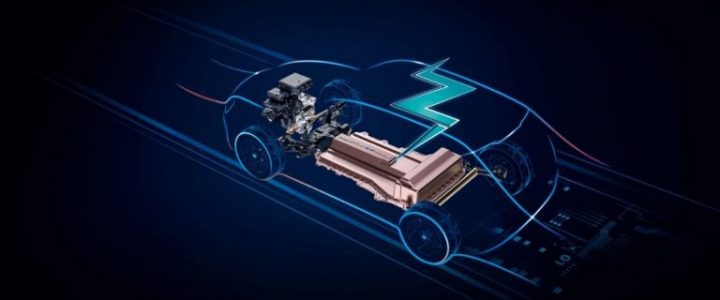
| Cristiano M. Verrelli | A.Y. 2021-22 to A.Y. 2024-25 (Control of Electrical Machines (B-C-E) |
|
|
A.Y. 2025-26 (new name CONTROL OF ELECTRICAL MOTORS AND VEHICLES ) |
| didatticaweb | |
| ✅ All syllabi📑
Code:8039782 |
| 2 YEAR | II semester | 6 CFU |
| Cristiano M. Verrelli | A.Y. 2021-22 to A.Y. 2024-25 (Control of Electrical Machines (B-C-E) |
|
|
A.Y. 2025-26 (new name CONTROL OF ELECTRICAL MOTORS AND VEHICLES ) |
| didatticaweb | |
| ✅ All syllabi📑
Code:8039782 |
| 2 YEAR | II semester | 6 CFU |
| Arianna Mencattini | A.Y. 2021-22
A.Y. 2022-23 |
| A.Y. 2023-24 Measurement Systems for Mechatronics
A.Y. 2024-25: Computer Vision – program |
|
| Code: 8039787 SSD: ING/INF/07 |
LEARNING OUTCOMES: Learning basic concepts in digital image processing and analysis as a novel measurement system in biomedical fields. The main algorithms will be illustrated particularly devoted to the image medical fields.
KNOWLEDGE AND UNDERSTANDING: The student acquires knowledge related to the possibility to use an image analysis platform to monitor the dynamics of a given phenomenon and to extract quantitative information from digital images such as object localization and tracking in digital videos.
APPLYING KNOWLEDGE AND UNDERSTANDING: The student acquires the capability to implement the algorithms in Matlab through dedicated lessons during the course with the aim of being able to autonomously develop new codes for the solution of specific problems in different application fields.
MAKING JUDGEMENTS: :
The student must be able to integrate the basic knowledge provided with those deriving from the other courses such as probability, signal theory, and pattern recognition. some fundamentals of measurement systems as well as basic metrological definitions will be provided in support of background knowledge.
COMMUNICATION SKILLS:
The student solves a written test and develops a project in Matlab that illustrates during the oral exam. The project can be done in a group to demonstrate working group capabilities.
LEARNING SKILLS:
Students will be able to read and understand scientific papers and books in English and also to deepen some topics. In some cases, students will develop also experimental tests with time-lapse microscopy acquisition in the department laboratory.
SYLLABUS:
Fundamentals of metrology. Basic definitions: resolution, accuracy, precision, reproducibility, and their impact over an image based measurement system. Image processing introduction. Image representation. Spatial and pixel resolution. Image restoration. Deconvolution. Deblurring. Image quality assessment. Image enhancement. Image filtering for smoothing and sharpening. Image segmentation: pixel based (otsu method), edge based, region based (region growing), model based (active contour, Hough transform), semantic segmentation. Morphological operators. Object recognition and image classification. Case study: defects detection, object tracking in biology, computer assisted diagnosis, facial expression in human computer interface.
Matlab exercises.
| 2 YEAR | II semester | 6 CFU |
| Luciano CANTONE | since A.Y. 2018-19 – program 📑 |
| (by Engineering Sciences) | |
| Code: 80300065 SSD:ING-IND/14 |
| 2 YEAR | II semester | 9 CFU |
| Stefano CORDINER (6/9 cfu) Lorenzo BARTOLUCCI (3/9 cfu) |
A.Y. 2021-22
Internal Combustion Engines |
| Since A.Y. 2022-23
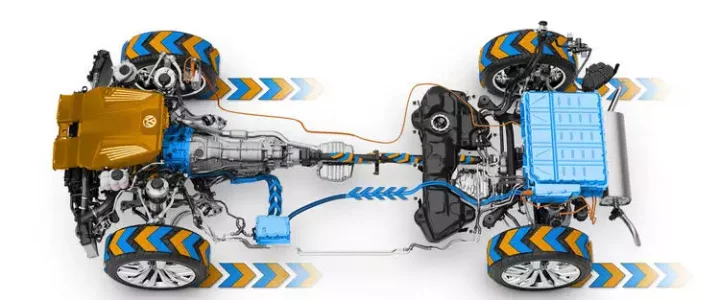
POWERTRAIN TECHNOLOGIES FOR FUTURE MOBILITY
|
|
 Syllabus 
Code: 80300079 80300077 M-6264 IIND-06/A |
| 1 YEAR | II semester | 6 CFU |
| ICT and Internet Engineering | |
| Marina RUGGIERI (5cfu)
Tommaso ROSSI (1cfu) |
A.Y. 2025-26
|
| Code: 8039514 SSD: ING-INF/03 |
The Digital Signal Processing teaching modules offer students the opportunity to become designers, providing a solid theoretical basis, multiple design techniques, and Matlab script development skills.
DSP is offered to Mechatronics students with the option of 6 credits and 9 credits format. Students who select the 6-credit option might be interested in adding a +3 credits of formative activities, with focus on pre-assigned additional topics of the DSP realm.
| 1 YEAR | II semester | 6 CFU |
| Michela GELFUSA | A.Y. 2021-22 (by Engineering Sciences)
A.Y. 2024-25 (last year) |
| Code: 80300063 SSD: ING-IND/10 (by Engineering Sciences) |

| 1 YEAR | II semester | 6 CFU |
| Andrea Micheletti | A.Y. 2021-22 (9 cfu) |
| Andrea Micheletti | A.Y. 2022-23 A.Y. 2024-25 (6 cfu)ES – Mechanics of Materials and Structures (MMS) — A. Micheletti |
| Syllabus
Code: 80300064 |
| PROFESSOR | 1 Year – II semester | 6 CFU + 3 cfu extra |
| Rocco Giofre’ | A.Y. 2021-22 to A.Y. 2022-23 |
| Paolo Colantonio | since A.Y. 2023-24 |
|
|
Students who include Analogue Electronics in their study plan are strongly advised to take it in its 9-CFU version, with the last 3 CFUs (out of 9) serving as Extra Credits.
SyllabusClassification of electrical systems and requirements.
Analysis of transitory and frequency behavior.
Distortion in electronic systems and Bode diagrams.
Diode semiconductor devices and circuit applications: clipper, clamper, peak detector, etc.
Bipolar Junction and Field Effect Transistors.
Biasing techniques for Transistors.
Amplifiers classification, analysis and circuit design.
Differential amplifiers and Cascode.
Current mirrors.
Frequency response of single and cascaded amplifiers.
Feedback amplifiers and stability issues.
Power amplifiers.
Operational amplifiers and related applications.
Integrated circuits and voltage waveform generators.
Oscillator circuits.
| 1 YEAR | II semester | 6 CFU |
| Antonio Agresti (3cfu) Francesca De Rossi (3cfu) |
A.Y. 2021-22 |
| Antonio Agresti (3cfu) Fabio Matteocci (3cfu) |
A.Y. 2022-23 A.Y. 2023-24 |
| Antonio Agresti (5cfu)
Sara Pescetelli (1cfu) |
A.Y. 2024-25 A.Y. 2025-26
|
| didatticaweb | |
| Syllabus
Code: 8039791 |
| PROFESSOR | 1st Year – II semester | 9 CFU |
| Luca DI NUNZIO (9 cfu) | A.Y. 2021-22 |
| Luca DI NUNZIO (5 cfu)
Vittorio MELINI (2 cfu) Sergio SPANO’ (2 cfu) |
since A.Y. 2022-23 to 2024-25 |
| Alessia DI VITO (7 cfu)
Gemma GILIBERTI (2 cfu) |
since A.Y. 2025-26
|
|
|
Course Description: VLSI Systems Design
This course provides the methodological and practical skills required for the design of complex digital systems, ranging from theoretical foundations to implementation on programmable logic devices. The program is structured into two integrated modules.
Module 1: Digital Systems and Architectures (7 ECTS)
This module introduces the principles of digital electronics and circuit synthesis methodologies.
Foundations of Digital Electronics: Course introduction; Boolean algebra and expression minimization techniques (SOP canonical forms and Karnaugh maps).
Combinational Logic Circuits: Analysis and design of standard functional blocks (adders, subtractors, comparators, encoders/decoders, multiplexers/demultiplexers, shifters, and multipliers).
Sequential Logic and Digital Systems: Study of memory elements (latches, flip-flops) and design of registers, counters, and Finite State Machines (FSMs). Design considerations and integration of building blocks for digital systems.
Programmable Logic Devices: Overview and architecture of programmable devices (PROM, PLA, PAL, CPLD, and FPGA).
Module 2: VHDL Design and Simulation (2 ECTS)
This module provides the practical tools for hardware description and verification.
VHDL Language: Introduction to the fundamental constructs of the language for digital system modeling.
Simulation and Design: Methodologies for the design and functional verification of digital systems through simulation tools.
Final Project: Development of a digital design project to be presented during the final examination.
updated: 24/04/2024
 Block: B – Electronics
 Course Code: 8037954 (9CFU)
 SSD2015: ING-INF/01