 UNIVERSITA' DEGLI STUDI ROMA "TOR VERGATA"
| 1 YEAR | II semester | 6 CFU |
| Christian Falconi | A.Y. 2022-23 (since) |
| A.Y. 2023-24 (new block E) | |
| Christian Falconi (4)
Usman Khan (2) |
A.Y. 2025-26 |
| didatticaweb | |
Code: 80300103 |
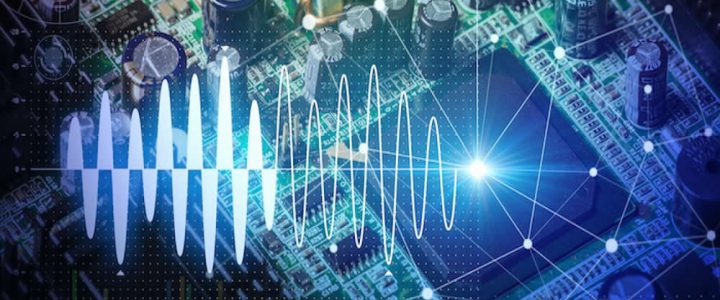
| 1 YEAR | II semester | 6 CFU |
| Christian Falconi | A.Y. 2022-23 (since) |
| A.Y. 2023-24 (new block E) | |
| Christian Falconi (4)
Usman Khan (2) |
A.Y. 2025-26 |
| didatticaweb | |
Code: 80300103 |

| 2 YEAR | II semester | 6 CFU |
| Arianna Mencattini | A.Y. 2021-22
A.Y. 2022-23 |
| A.Y. 2023-24 Measurement Systems for Mechatronics
A.Y. 2024-25: Computer Vision – program |
|
| Code: 8039787 SSD: ING/INF/07 |
LEARNING OUTCOMES: Learning basic concepts in digital image processing and analysis as a novel measurement system in biomedical fields. The main algorithms will be illustrated particularly devoted to the image medical fields.
KNOWLEDGE AND UNDERSTANDING: The student acquires knowledge related to the possibility to use an image analysis platform to monitor the dynamics of a given phenomenon and to extract quantitative information from digital images such as object localization and tracking in digital videos.
APPLYING KNOWLEDGE AND UNDERSTANDING: The student acquires the capability to implement the algorithms in Matlab through dedicated lessons during the course with the aim of being able to autonomously develop new codes for the solution of specific problems in different application fields.
MAKING JUDGEMENTS: :
The student must be able to integrate the basic knowledge provided with those deriving from the other courses such as probability, signal theory, and pattern recognition. some fundamentals of measurement systems as well as basic metrological definitions will be provided in support of background knowledge.
COMMUNICATION SKILLS:
The student solves a written test and develops a project in Matlab that illustrates during the oral exam. The project can be done in a group to demonstrate working group capabilities.
LEARNING SKILLS:
Students will be able to read and understand scientific papers and books in English and also to deepen some topics. In some cases, students will develop also experimental tests with time-lapse microscopy acquisition in the department laboratory.
SYLLABUS:
Fundamentals of metrology. Basic definitions: resolution, accuracy, precision, reproducibility, and their impact over an image based measurement system. Image processing introduction. Image representation. Spatial and pixel resolution. Image restoration. Deconvolution. Deblurring. Image quality assessment. Image enhancement. Image filtering for smoothing and sharpening. Image segmentation: pixel based (otsu method), edge based, region based (region growing), model based (active contour, Hough transform), semantic segmentation. Morphological operators. Object recognition and image classification. Case study: defects detection, object tracking in biology, computer assisted diagnosis, facial expression in human computer interface.
Matlab exercises.

| 2 YEAR | 1 semester | 12 CFU |
| Patrick LONGHI (3cfu) Giancarlo ORENGO (3cfu) Gian Carlo CARDARILLI (4cfu) Luca DI NUNZIO (2cfu) |
since A.Y. 2019-20 |
| M-5519 – ELECTRONICS OF IOT (6cfu)
MECHA – Electronics of IOT and Embedded Systems (IOT) – G. Cardarilli – G. Orengo |
|
|
Code: 8039795 |
SYLLABUS:
(Longhi):
Introduction to radiating elements and their key parameters.
Ideal and practical link budget.
The effect of noise in electronic receivers, figures of merit and mathematical modelling. Receiver G/T.
Practical aspects of IoT RF systems
RFID
Radiating elements key parameters, gain, directivity, HPBW, nulls, radiation pattern, polarization, and input impedance. Some practical cases: the mono/di-pole family, microstrip antennas, parabolic reflector, wearables
Introduction to RF transceiver systems and key-components (switches, HPA, LNA, mixers, frequency generators).
(G.Orengo):
Summary of Digital Electronics: digital encoding of information, binary (fixed and floating point), hexadecimal and ASCII; operators and main logic circuits, registers and memories, programmable devices. Prototyping boards for IoT (Arduino, Rasberry), Systems on Chip (SoC), architecture of a microcontroller, description of the Arduino Uno board. Programming languages (assembly, compiled, interpreted), structure of an Arduino sketch (libraries, setups, loops, functions, interrupts), programming elements in C (variables, math and logical operations, cycles, conditional statements). Use of digital and analog I/O ports (A/D conversion, PWM output). Synchronous and asynchronous serial communication modes, wired (USB) and wireless with Bluetooth, RF and WiFi modules. Remote control of electronic modules (sensors, dc stepper and servo motors, LED/LCD displays etc.) from portable devices (Windows, IoS), through applications developed in Processing and Python, and mobile (Android), through Apps developed with the MIT App Inventor platform. Internet protocols for device local/remote control through WiFi modules connected as access points/clients to web platforms or public/private cloud servers controlled by laptops and/or mobile devices.
(G.Cardarilli):
– Introduction to the Internet of Things (IoT) and embedded systems
– Wireless and mobile communications
– The Sensors
– Low power processing
– IoT and machine learning applications
– Future developments in the field of IoT and embedded systems
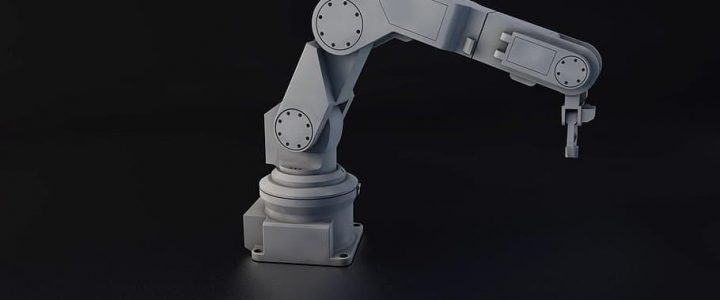
| 2 YEAR |
1 semester | 9 CFU |
| Riccardo MARINO | Since 2019-20 |
Code: 8039823 |

| 1 YEAR | I semester | 6 CFU |
| Marco Re |
since A.Y. 2021-25 |
| Vittorio Colombo | A.Y. 2025-26
|
| Didatticaweb
Code: 80300061 |
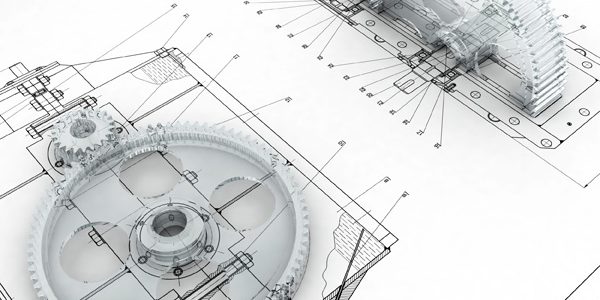
| 1 YEAR |
1 semester | 6 CFU |
| Marco Ceccarelli | A.Y. 2021-22 to 2024-25
A.Y. 2025-26 new name: 80300216 MECHANICS OF SYSTEMS FOR SIMULATIONS |
| Code: 803000062 SSD: ING-IND-13 (by Engineering Sciences) |
OBJECTIVES
LEARNING OUTCOMES: The course aims to teach students the knowledge and tools that are needed to address the issues that are related to the identification, modeling, analysis, and design of multi-body planar systems in English language and terminology
KNOWLEDGE AND UNDERSTANDING: modeling and procedures to recognize the structure and characteristics of mechanisms and machines
APPLYING KNOWLEDGE AND UNDERSTANDING: acquisition of analysis procedures for the understanding of kinematic and dynamic characteristics of mechanisms and machines
MAKING JUDGEMENTS: possibility of judging the functionality of mechanisms and machines with their own qualitative and quantitative assessments
COMMUNICATION SKILLS: learning technical terminology and procedures for presenting the performance of mechanisms
LEARNING SKILLS: learning technical terminology and procedures for the presentation of the performance of mechanisms
PREREQUISITES: knowledge of basic mechanics of rigid bodies and computation skills
SYLLABUS
Structure and classification of planar mechanical systems, kinematic modeling, mobility analysis, graphical approaches of kinematics analysis, kinematic analysis with computer-oriented algorithms; dynamics and statics modeling, graphical approaches of dynamics analysis, dynamic analysis with computer-oriented algorithms, performance evaluation; elements of mechanical transmissions.
BOOKS:
Lopez-Cajùn C., Ceccarelli M., Mecanismos, Trillas, Città del Messico
Shigley J.E., Pennock G.R., Uicker J.J., “Theory of Machines and Mechanisms”, McGraw-Hill, New York
Handnotes and papers by the teachers
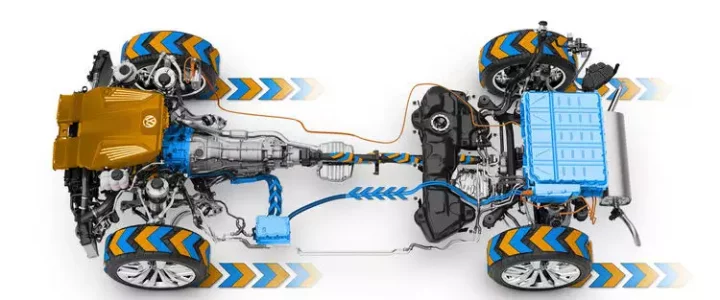
| 2 YEAR | II semester | 9 CFU |
| Stefano CORDINER (6/9 cfu) Lorenzo BARTOLUCCI (3/9 cfu) |
A.Y. 2021-22
Internal Combustion Engines |
| Since A.Y. 2022-23
POWERTRAIN TECHNOLOGIES FOR FUTURE MOBILITY
|
|
 Syllabus Syllabus
Code: 80300079 80300077 M-6264 |

| 1 YEAR | II semester | 6 CFU |
| Andrea Micheletti | A.Y. 2021-22 (9 cfu) |
| Andrea Micheletti | A.Y. 2022-23 A.Y. 2024-25 (6 cfu)ES – Mechanics of Materials and Structures (MMS) — A. Micheletti |
| Syllabus
Code: 80300064 |
| 1 YEAR | II semester | 6 CFU + 3 cfu extra |
| Rocco Giofre’ | A.Y. 2021-22
A.Y. 2022-23 |
| Paolo Colantonio | A.Y. 2023-24
|
| Code: 8037954 (9CFU) 80300060 (6CFU) SSD: ING-INF/01 (by Engineering Sciences) |
Students who include Analogue Electronics in their study plan are strongly advised to take it in its 9-CFU version, with the last 3 CFUs (out of 9) serving as Extra Credits.
| 1 YEAR | II semester | 6 CFU |
| Antonio Agresti (3cfu) Francesca De Rossi (3cfu) |
A.Y. 2021-22 |
| Antonio Agresti (3cfu) Fabio Matteocci (3cfu) |
A.Y. 2022-23 A.Y. 2023-24 |
| Antonio Agresti (5cfu)
Sara Pescetelli (1cfu) |
A.Y. 2024-25 A.Y. 2025-26
|
| didatticaweb | |
| Syllabus
Code: 8039791 |