 UNIVERSITA' DEGLI STUDI ROMA "TOR VERGATA"
| 2 YEAR | II semester | 6 CFU |
| Arianna Mencattini | A.Y. 2023-24 (ex MEASUREMENT SYSTEMS FOR MECHATRONICS)
A.Y. 2024-25: Computer Vision |
|
|
|
Code: 8039787 |

| 2 YEAR | II semester | 6 CFU |
| Arianna Mencattini | A.Y. 2023-24 (ex MEASUREMENT SYSTEMS FOR MECHATRONICS)
A.Y. 2024-25: Computer Vision |
|
|
|
Code: 8039787 |
| PROFESSOR | 1st Year – II semester | 6 CFU |
| Lorenzo BARTOLUCCI (3 CFU) Matteo BALDELLI (3 CFU) |
since A.Y. 2024-25 |

|
The course program includes the presentation and discussion of the following topics:

| 1 YEAR (Block C2) |
II semester | 6 CFU |
| (from Mechanics – Energetics) | |
| Prof. Marcello PUCCI |
since A.Y. 2024-25
|
| didatticaweb
Code: 80300151 |
It is suggested to have the basic knowledge of Electrical Network Analysis and Power Electronics
The course will be articulated in the following way:
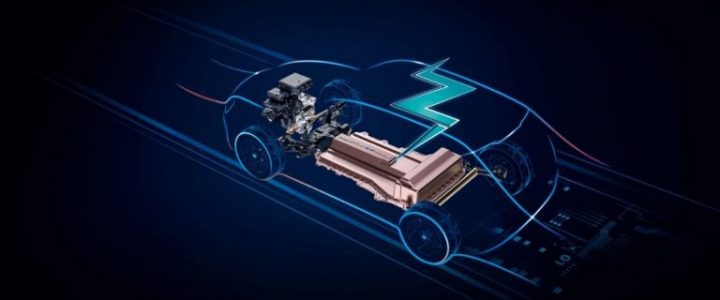
– Electric Vehicles
– Hybrid Electric Vehicles
– Electric Propulsion Systems for vehicles
– Series Hybrid Electric Drive Train Design
– Parallel Hybrid Electric Drive Train Design
– Energy Storage (Batteries, Supercapacitors – Ultrahigh-Speed Flywheels, Hybrid)
– Fuel Cell Vehicles
– Ship propulsion systems
– Vehicle to Grid (V2G) and Grid to Vehicle (G2V)
Educational material provided by the teacher
– John M. Miller, Propulsion Systems for Hybrid Vehicles, IET, 2008
– Iqbal Husain, Electric and Hybrid Vehicles: Design Fundamentals, 2010, CRC Press
– Mehrdad Ehsani, Yimin Gao, Ali Emadi, Modern Electric, Hybrid Electric, and Fuel Cell
Vehicles: Fundamentals, Theory, and Design, 2017, CRC Press
| 1 YEAR (Block C) |
1 semester | 6 CFU |
| (from ICT Internet Engineering) | |
| Prof. Gaetano MARROCCO |
A.Y. 2024-25 |
| DidatticaWeb
Code: 8039528 |
(prerequisite: ELECTROMAGNETIC FIELDS)
| 1 YEAR (Block C2) |
1 semester | 6 CFU |
| Prof. Fabio Matteocci |
A.Y. 2024-25 (new) |
| Code: 80300150 SSD: ING-INF/01 |
The course requires a basic knowledge of nanotechnologies applied to the generation and storage of electric power, as well as a basic understanding of the functioning of solar cells and batteries.
FORMATIVE OBJECTIVES
LEARNING OUTCOMES:
The main objectives of the course are the study of electric power generation and storage systems that can be implemented on vehicles. The lessons, therefore, focus on next-generation photovoltaics, thin-film deposition techniques, storage systems, supercapacitors, and thermoelectricity. The generation and storage technologies will then be studied from an application perspective through case studies.
KNOWLEDGE AND UNDERSTANDING:
Students will be able to:
a) To learn the working principles for energy generation and storage (EGS);
b) To understand and explain the solutions for EGS when applied in vehicles;
c) To solve simple problems concerning the use of design of integrated EGS systems;
d) To know how to design, develop and release a simple EGS system for vehicle integration.
APPLYING KNOWLEDGE AND UNDERSTANDING:
The student will be able to recognize the applicability areas for the various EGS systems. She/He will also be able to apply the knowledge and understanding developed during the course to study and understand recent literature.
MAKING JUDGEMENTS:
Students should be capable of identifying specific design scenarios and applying the most appropriate techniques for EGS. Additionally, they should be able to compare the effectiveness of various EGS systems while evaluating their advantages and disadvantages.
COMMUNICATION SKILLS:
The student will be able to clearly and unequivocally communicate the course content to specialized interlocutors. He will also be able to communicate the main approches to the development of EGS systems. The student will also have a sufficient background to undertake a thesis/research work in EGS applications.
LEARNING SKILLS:
Being sufficiently skilled in the specific field to undertake subsequent studies characterized by a high degree of autonomy.
SYLLABUS
1. Introduction on Nanotechnology: Top Down and Bottom Up Approaches2. Physical, Chemical Deposition, Solution Processing (Working Principle and Applications) 3. Energy Generation: Conventional and Emergent Photovoltaics (Working Principle and Applications).
4. Case of Study: Perovskite solar Cells (Working Principle, Deposition Techniques and applications)
5. Storage: Conventional and Emergent technologies for Batteries
6. Electrical and Chemical Properties of Batteries (Working Principle)
7. System Integration of Energy Generation and Storage solutions
8. Opportunities and Limitations of vehicle-integrated solutions for Generation and Storage 9. Beyond Batteries: Supercapacitors and thermoelectricity
The lecture will be held in the classroom with the projection of slides that will be released to the students at the end of the lecture.
The student will only be admitted to the final exam if they have attended 80% of the course hours.
| 1 YEAR | II semester | 6 CFU |
| Christian Falconi | A.Y. 2022-23 (since) |
| A.Y. 2023-24 (new block E) | |
| Christian Falconi (4)
Usman Khan (2) |
A.Y. 2025-26 |
| didatticaweb | |
Code: 80300103 |
| 2 YEAR | II semester | 6 CFU |
| Cristiano M. Verrelli | A.Y. 2021-22 to A.Y. 2024-25 (Control of Electrical Machines (B-C-E) |
|
|
A.Y. 2025-26 (new name CONTROL OF ELECTRICAL MOTORS AND VEHICLES ) |
| didatticaweb | |
| ✅ All syllabi📑
Code:8039782 |

| 2 YEAR | 1 semester | 12 CFU |
| Patrick LONGHI (3cfu) Giancarlo ORENGO (3cfu) Gian Carlo CARDARILLI (4cfu) Luca DI NUNZIO (2cfu) |
since A.Y. 2019-20 |
| M-5519 – ELECTRONICS OF IOT (6cfu)
MECHA – Electronics of IOT and Embedded Systems (IOT) – G. Cardarilli – G. Orengo |
|
|
Code: 8039795 |
SYLLABUS:
(Longhi):
Introduction to radiating elements and their key parameters.
Ideal and practical link budget.
The effect of noise in electronic receivers, figures of merit and mathematical modelling. Receiver G/T.
Practical aspects of IoT RF systems
RFID
Radiating elements key parameters, gain, directivity, HPBW, nulls, radiation pattern, polarization, and input impedance. Some practical cases: the mono/di-pole family, microstrip antennas, parabolic reflector, wearables
Introduction to RF transceiver systems and key-components (switches, HPA, LNA, mixers, frequency generators).
(G.Orengo):
Summary of Digital Electronics: digital encoding of information, binary (fixed and floating point), hexadecimal and ASCII; operators and main logic circuits, registers and memories, programmable devices. Prototyping boards for IoT (Arduino, Rasberry), Systems on Chip (SoC), architecture of a microcontroller, description of the Arduino Uno board. Programming languages (assembly, compiled, interpreted), structure of an Arduino sketch (libraries, setups, loops, functions, interrupts), programming elements in C (variables, math and logical operations, cycles, conditional statements). Use of digital and analog I/O ports (A/D conversion, PWM output). Synchronous and asynchronous serial communication modes, wired (USB) and wireless with Bluetooth, RF and WiFi modules. Remote control of electronic modules (sensors, dc stepper and servo motors, LED/LCD displays etc.) from portable devices (Windows, IoS), through applications developed in Processing and Python, and mobile (Android), through Apps developed with the MIT App Inventor platform. Internet protocols for device local/remote control through WiFi modules connected as access points/clients to web platforms or public/private cloud servers controlled by laptops and/or mobile devices.
(G.Cardarilli):
– Introduction to the Internet of Things (IoT) and embedded systems
– Wireless and mobile communications
– The Sensors
– Low power processing
– IoT and machine learning applications
– Future developments in the field of IoT and embedded systems
| 2 YEAR |
1 semester | 9 CFU |
| Riccardo MARINO | Since 2019-20 |
Code: 8039823 |
| 2 YEAR | II semester | 9 CFU |
| Stefano CORDINER (6/9 cfu) Lorenzo BARTOLUCCI (3/9 cfu) |
A.Y. 2021-22
Internal Combustion Engines |
| Since A.Y. 2022-23
POWERTRAIN TECHNOLOGIES FOR FUTURE MOBILITY
|
|
 Syllabus 
Code: 80300079 80300077 M-6264 IIND-06/A |
 Block: C2 –
 Course Code: 80300136 (6CFU)
 SSD2015: ING-IND/08