Quantum Computing (D-opt)

Mathematical-Methods
2 YEAR (Block D)
2 semester 8 CFU
(from Physics LM-17 )
Prof.  A.Y. 2025-26 activated
start in the a.y. 2026-27
Code: 80300140
SSD: FIS/01
https://www.master-mass.eu/


  • PREREQUISITES: Basic concepts of Linear Algebra, Mathematical Analysis and Python Programming
  • OBJECTIVE: The lectures are thought to give a solid knowledge of the theoretical Machine Learning (ML) background. A special focus is given to the ML application for data analysis of physical systems. The students will also learn how to implement a typical ML model using the standard libraries in a Python environment.


MACHINE LEARNING METHODS FOR PHYSICS – 8 CFU (D-opt)

Mathematical-Methods
2 YEAR (Block D)
2 semester 8 CFU
(from Physics LM-17 )
Prof. Michele BUZZICOTTI A.Y. 2025-26 program 📑
Code: 80300140
SSD: FIS/01
https://www.master-mass.eu/


  • PREREQUISITES: Basic concepts of Linear Algebra, Mathematical Analysis and Python Programming
  • OBJECTIVE: The lectures are thought to give a solid knowledge of the theoretical Machine Learning (ML) background. A special focus is given to the ML application for data analysis of physical systems. The students will also learn how to implement a typical ML model using the standard libraries in a Python environment.


Block D – Computational Methods

Block D

—> This block is conceived for eager students of Mechatronics Engineering coming from Engineering Sciences or Systems Engineering who are willing to complete their knowledge by acquiring advanced mathematical skills and computing capabilities.

Besides a first advanced course in mathematical analysis addressing complements of complex variable theory and elements of distribution theory, the block provides a second course introducing the Python exosystem for scientific computing along with a third course on data analysis and signal processing techniques for model fitting and parametric estimates or non-linear solving of inverse problems (such as image denoising, source separation, and PSF decomposition).

The fourth course will finally provide a solid knowledge of the theoretical background behind the main Machine Learning (ML) algorithms from Neural Networks to Reinforcement Learning, along with their application (by using the standard libraries in a Python environment) to open physical problems.

Block D aims to prepare professionals who can deal with complex design and managing problems using advanced mathematical tools, yet with an engineering attitude.

Professional opportunities involve R&D divisions in manufacturing or engineering companies that deal with complex computational problems or need advanced mathematical tools.

Year sem

SPECIFIC SUBJECTS – Block D

CFU SSD class hours
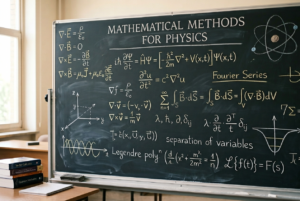
1 I MATHEMATICAL METHODS FOR PHYSICS 8 FIS/02 80
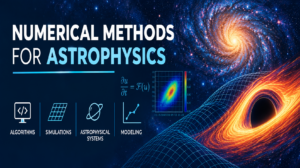
1 I NUMERICAL METHODS FOR ASTROPHYSICS 6 FIS/05 60
2 I LABORATORY – CALCULUS 4 INF/01 40
2 II MACHINE LEARNING METHODS FOR PHYSICS 6 FIS/01 60
    TOTAL ECTS
24    

1st Year – I semII sem

2nd Year  – I sem – II sem (since A.Y. 2025-26)


MATHEMATICAL METHODS FOR PHYSICS – 8 CFU (block D)

Mathematical-Methods
1 YEAR (Block D)
1 semester 8 CFU
(from Physics)
Prof. Giuseppe DIBITETTOGiuseppe.Dibitetto@roma2.infn.it A.Y. 2024-25 – program 📑
Code: 80300141
SSD: FIS/02
https://www.master-mass.eu/s1-mathematical-methods-for-physics/https://www.fisica.uniroma2.it/insegnamenti/mathematical-methods-for-physics/


ELECTRONICS OF IOT AND EMBEDDED SYSTEMS – 12 CFU

ELECTRONICS OF IOT AND EMBEDDED SYSTEMS – 12 CFU
2 YEAR 1 semester 12 CFU
Patrick LONGHI (3cfu)
Giancarlo ORENGO (3cfu)
Gian Carlo CARDARILLI (4cfu)
Luca DI NUNZIO (2cfu)
since A.Y. 2019-20
M-5519 – ELECTRONICS OF IOT (6cfu)

MECHA – Electronics of IOT and Embedded Systems (IOT)G. Cardarilli – G. Orengo
M-5520 – DESIGN OF EMBEDDED SYSTEMS FOR MECHATRONICS (6cfu)

Syllabus📑

Code: 8039795
SSD: ING-INF/01

SYLLABUS:

(Longhi):

Introduction to radiating elements and their key parameters.
Ideal and practical link budget.
The effect of noise in electronic receivers, figures of merit and mathematical modelling. Receiver G/T.
Practical aspects of IoT RF systems
RFID
Radiating elements key parameters, gain, directivity, HPBW, nulls, radiation pattern, polarization, and input impedance. Some practical cases: the mono/di-pole family, microstrip antennas, parabolic reflector, wearables
Introduction to RF transceiver systems and key-components (switches, HPA, LNA, mixers, frequency generators).

(G.Orengo):

Summary of Digital Electronics: digital encoding of information, binary (fixed and floating point), hexadecimal and ASCII; operators and main logic circuits, registers and memories, programmable devices. Prototyping boards for IoT (Arduino, Rasberry), Systems on Chip (SoC), architecture of a microcontroller, description of the Arduino Uno board. Programming languages ​​(assembly, compiled, interpreted), structure of an Arduino sketch (libraries, setups, loops, functions, interrupts), programming elements in C (variables, math and logical operations, cycles, conditional statements). Use of digital and analog I/O ports (A/D conversion, PWM output). Synchronous and asynchronous serial communication modes, wired (USB) and wireless with Bluetooth, RF and WiFi modules. Remote control of electronic modules (sensors, dc stepper and servo motors, LED/LCD displays etc.) from portable devices (Windows, IoS), through applications developed in Processing and Python, and mobile (Android), through Apps developed with the MIT App Inventor platform. Internet protocols for device local/remote control through WiFi modules connected as access points/clients to web platforms or public/private cloud servers controlled by laptops and/or mobile devices.

(G.Cardarilli):

– Introduction to the Internet of Things (IoT) and embedded systems
– Wireless and mobile communications
– The Sensors
– Low power processing
– IoT and machine learning applications
– Future developments in the field of IoT and embedded systems


POWERTRAIN TECHNOLOGIES FOR FUTURE MOBILITY – 9 CFU

POWERTRAIN TECHNOLOGIES FOR FUTURE MOBILITY – 9 CFU
2 YEAR  II semester  9 CFU
Stefano CORDINER (6/9 cfu)
Lorenzo BARTOLUCCI (3/9 cfu)
A.Y. 2021-22

Internal Combustion Engines

Since A.Y. 2022-23

POWERTRAIN TECHNOLOGIES FOR FUTURE MOBILITY

didatticaweb
✅ Syllabus📑

Code: 80300079

80300077 M-6264
SSD: ING/IND/08
(by Mechanical Engineering)

NANOTECHNOLOGY – 6 CFU

NANOTECHNOLOGY – 6 CFU
1 YEAR II semester  6 CFU
Antonio Agresti (3cfu)
Francesca De Rossi (3cfu)
A.Y. 2021-22
Antonio Agresti (3cfu)
Fabio Matteocci (3cfu)
A.Y. 2022-23
A.Y. 2023-24
Antonio Agresti (5cfu)

Sara Pescetelli (1cfu)

A.Y. 2024-25
A.Y. 2025-26

didatticaweb
 ✅ Syllabus📑

Code: 8039791
SSD: ING-INF/01