Feedback Control Systems (optE) 25-26 – Mathematics of Feedback Control 26-27

Feedback Control Systems (optE) 25-26 – Mathematics of Feedback Control 26-27
1 YEAR II semester  6 CFU
Cristiano M. VERRELLI since 2017-18
👉(provided by Engineering Sciences)
since 2022-23 to 2024-25 (block B)
since 2025-26 (block optE)
Cristiano M. VERRELLI (6)
+  Mohamed El Arayshi (integrative course)
2025-26
Cristiano M. VERRELLI (4)
Mohamed El Arayshi (2)
2026-27 change name: Mathematics of Feedback Control
✅ Syllabus📑

 🧩 Block: E 

📌 Course Code: 8039367 (6 CFU)

🏷 SSD2015: ING-INF/04
🏷 SSD2024:

📑 Grading criteria

https://t0.gstatic.com/faviconV2?client=SOCIAL&type=FAVICON&fallback_opts=TYPE,SIZE,URL&url=https://didatticaweb.uniroma2.it&size=32  DidatticaWeb

SYLLABUS:

The matrix exponential; the variation of constants formula.

Computation of the matrix exponential via eigenvalues and eigenvectors and via residual matrices. Necessary and sufficient conditions for exponential stability: Routh-Hurwitz criterion. Invariant subspaces.

Impulse responses, step responses and steady state responses to sinusoidal inputs. Transient behaviours. Modal analysis: mode excitation by initial conditions and by impulsive inputs; modal observability from output measurements; modes which are both excitable and observable. Popov conditions for modal excitability and observability. Autoregressive moving average (ARMA) models and transfer functions.

Kalman reachability conditions, gramian reachability matrices and the computation of input signals to drive the system between two given states. Kalman observability conditions, gramian observability matrices and the computation of initial conditions given input and output signals. Equivalence between Kalman and Popov conditions.

Kalman decomposition for non-reachable and non-observable systems.

Eigenvalues assignment by state feedback for reachable systems. Design of asymptotic observers and Kalman filters for state estimation of observable systems. Design of dynamic compensators to stabilize any reachable and observable system. Design of regulators to reject disturbances generated by linear exosystems.

Bode plots. Static gain, system gain and high-frequency gain.

Zero-pole cancellation.

STATISTICS:

A.Y.  Mechatronics students Other courses Students Mechatronics average Other courses average
2019/2020 10 62 24 23
2020/2021 19 25 23 24
2021/2022 13 44 21 22

POWER ELECTRONICS AND ELECTRICAL DRIVES – 9 CFU

POWER ELECTRONICS AND ELECTRICAL DRIVES – 9 CFU
2 YEAR 2 semester 9 CFU
Stefano Bifaretti
A.Y. 2021-22
Stefano Bifaretti (7cfu)

Cristina Terlizzi (2cfu)

A.Y. 2022-23 1st Year I semester
A.Y. 2023-24  (NOT HELD)
A.Y. 2024-25
Stefano Bifaretti A.Y. 2025-26

MECHA – Power Electronics and Electrical Drives (PEED) S. Bifaretti

✅ Syllabus📑

Code: 8039781
SSD: ING-INF/01


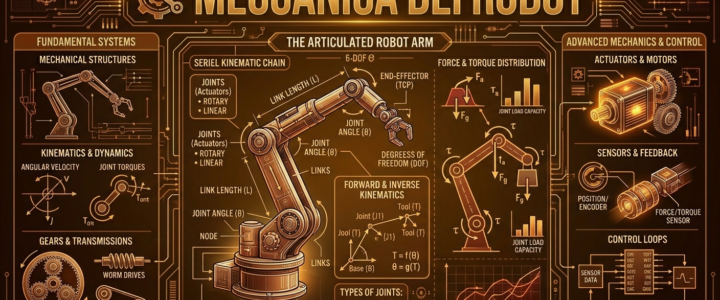
ROBOT MECHANICS – 9 CFU

ROBOT MECHANICS – 9 CFU
1 YEAR (Blocks B|C)24-25
2 YEAR (Blocks A|D|E)24-25
(All)25-26
1 semester 9 CFU
Marco Ceccarelli (6/9 cfu)

Matteo Russo (3/6 cfu)

A.Y. 2021-22

A.Y. 2022-23

Matteo Russo (9cfu)
since A.Y. 2023-24

MECHA – Robot Mechanics (ROM)M. Russo

didatticaweb
Syllabus📑

Code: 8039785
SSD: ING-IND/13

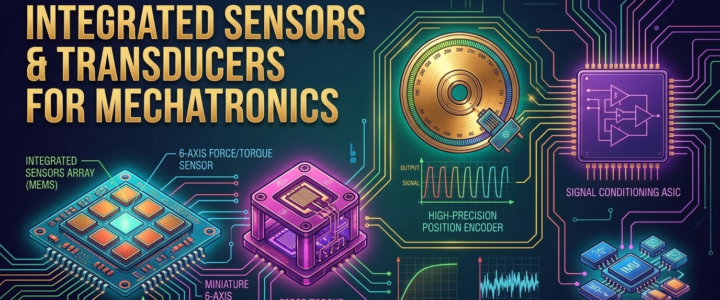
INTEGRATED SENSORS – 9 CFU

Integrated Sensors 9 CFU
1 YEAR (ALL) 25-26
2 YEAR (Block B)24-25
1 semester 9 CFU
Corrado Di Natale A.Y. 2019-20 (new name, ex Electronic Devices and Sensors)
Alexandro Catini (6cfu)
Corrado  Di Natale (3cfu)
A.Y. 2022-23
A.Y. 2023-24
Alexandro Catini (8cfu) – catini@ing.uniroma2.it
Corrado  Di Natale (1cfu) 
A.Y. 2024-25

MECHA – Integrated Sensors (IS)A. Catini – C. Di Natale

didatticaweb
Syllabus📑

Code: 8039927
SSD: ING-INF/01


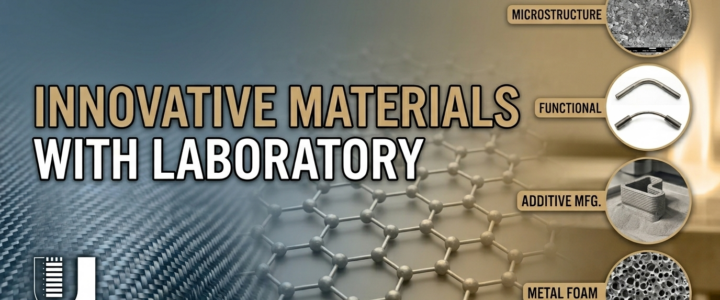
Innovative Materials with Laboratory – 6 CFU (blocks C1-E)

INNOVATIVE MATERIALS OF LABORATORY
PROFESSOR  1 Year – 1 semester 6 CFU
TATA MARIA ELISA (1cfu)
COSTANZA GIROLAMO (1cfu)
VARONE ALESSANDRA (4cfu)
A.Y. 2020-21 to A.Y. 2024-25 (B-C1-E)
COSTANZA GIROLAMO (4cfu)

TATA MARIA ELISA (2cfu)

A.Y. 2025-26 (C1-E)
 👉(provided by Mechatronics Engineering) 
 🧩 Block: C1 – E

📌 Course Code: 8039786

SSD2015: ING-IND/21
SSD2024: IIND-03/C 

 📑 Grading criteria

 https://t0.gstatic.com/faviconV2?client=SOCIAL&type=FAVICON&fallback_opts=TYPE,SIZE,URL&url=https://didatticaweb.uniroma2.it&size=32 didaticaweb

Syllabus

Prof. COSTANZA (4/6 CFU)
Metallurgy Fundamentals: crystal structure, defects, plastic deformation. Mechanical tests.
Ultrafine grained (UFG) materials: microstructural features and production routes.
Shape memory alloys. One way and Two way shape memory effect. Shape setting and training.
Nanoporous and mesoporous materials: structural characterization and properties.
Functional and Smart Materials. Property change as a response of external stimulus: thermochromic, photomechanical. Energy conversion: piezoelectric, thermoelectric, photoluminescent. Phase change materials . Functionally graded materials.
Powder metallurgy, Additive Manufacturing Technologies.
Advanced composite materials: properties, applications and their production routes.

Prof. TATA (2/6 CFU)
Amorphous alloys: production and applications of metallic glasses as mechatronic devices. Alloys with mixed structure (nanocrystalline and amorphous).
Porour materials: metal foams, open and closed-porosity (micro and macro). Classification according to size and shape of the pores. Properties (sound, energy and vibration absorption, crash behavior) and production methods. Functional and structural applications: lightweight construction, automotive. Metal sandwich structures.