 UNIVERSITA' DEGLI STUDI ROMA "TOR VERGATA"
| 1 YEAR (Block D) |
1 semester | 6 CFU |
| (from Physics) | |
| Prof. Herve Bourdin – Herve.Bourdin@roma2.infn.it | A.Y. 2024-25 – program 📑 |
| Code: 80300139 SSD: FIS/05 |
| 1 YEAR (Block D) |
1 semester | 6 CFU |
| (from Physics) | |
| Prof. Herve Bourdin – Herve.Bourdin@roma2.infn.it | A.Y. 2024-25 – program 📑 |
| Code: 80300139 SSD: FIS/05 |
| 1 YEAR (Block C) |
1 semester | 6 CFU |
| (from ICT Internet Engineering) | |
| Prof. Gaetano MARROCCO |
A.Y. 2024-25 |
| DidatticaWeb
Code: 8039528 |
(prerequisite: ELECTROMAGNETIC FIELDS)
| 1 YEAR (Block C2) |
1 semester | 6 CFU |
| Prof. Fabio Matteocci |
A.Y. 2024-25 (new) |
| Code: 80300150 SSD: ING-INF/01 |
The course requires a basic knowledge of nanotechnologies applied to the generation and storage of electric power, as well as a basic understanding of the functioning of solar cells and batteries.
FORMATIVE OBJECTIVES
LEARNING OUTCOMES:
The main objectives of the course are the study of electric power generation and storage systems that can be implemented on vehicles. The lessons, therefore, focus on next-generation photovoltaics, thin-film deposition techniques, storage systems, supercapacitors, and thermoelectricity. The generation and storage technologies will then be studied from an application perspective through case studies.
KNOWLEDGE AND UNDERSTANDING:
Students will be able to:
a) To learn the working principles for energy generation and storage (EGS);
b) To understand and explain the solutions for EGS when applied in vehicles;
c) To solve simple problems concerning the use of design of integrated EGS systems;
d) To know how to design, develop and release a simple EGS system for vehicle integration.
APPLYING KNOWLEDGE AND UNDERSTANDING:
The student will be able to recognize the applicability areas for the various EGS systems. She/He will also be able to apply the knowledge and understanding developed during the course to study and understand recent literature.
MAKING JUDGEMENTS:
Students should be capable of identifying specific design scenarios and applying the most appropriate techniques for EGS. Additionally, they should be able to compare the effectiveness of various EGS systems while evaluating their advantages and disadvantages.
COMMUNICATION SKILLS:
The student will be able to clearly and unequivocally communicate the course content to specialized interlocutors. He will also be able to communicate the main approches to the development of EGS systems. The student will also have a sufficient background to undertake a thesis/research work in EGS applications.
LEARNING SKILLS:
Being sufficiently skilled in the specific field to undertake subsequent studies characterized by a high degree of autonomy.
SYLLABUS
1. Introduction on Nanotechnology: Top Down and Bottom Up Approaches2. Physical, Chemical Deposition, Solution Processing (Working Principle and Applications) 3. Energy Generation: Conventional and Emergent Photovoltaics (Working Principle and Applications).
4. Case of Study: Perovskite solar Cells (Working Principle, Deposition Techniques and applications)
5. Storage: Conventional and Emergent technologies for Batteries
6. Electrical and Chemical Properties of Batteries (Working Principle)
7. System Integration of Energy Generation and Storage solutions
8. Opportunities and Limitations of vehicle-integrated solutions for Generation and Storage 9. Beyond Batteries: Supercapacitors and thermoelectricity
The lecture will be held in the classroom with the projection of slides that will be released to the students at the end of the lecture.
The student will only be admitted to the final exam if they have attended 80% of the course hours.

| 2 YEAR | I semester | 4 CFU |
| Hendrik Speleers | A.Y. 2025-26 |
| Didatticaweb | |
| (from the Mathematical Department)
Code: 8065938 – new 8068685 |
| 1 YEAR | II semester | 6 CFU |
| Christian Falconi | A.Y. 2022-23 (since) |
| A.Y. 2023-24 (new block E) | |
| Christian Falconi (4)
Usman Khan (2) |
A.Y. 2025-26 |
| didatticaweb | |
Code: 80300103 |

| 1 YEAR | I semester | 6 CFU |
| Mauro De Sanctis | ICT and Internet Engineering (6 of 9) |
| A.Y. 2023-24
|
|
| Didatticaweb
Code: 80300052 |

| 1 YEAR | I semester | 6 CFU |
| Tommaso Rossi (3cfu)
Cesare Roseti (3cfu) |
ICT and Internet Engineering |
| didatticaweb | |
since A.Y. 2023-24
|
|
| Code: 8039553 SSD: ING-INF/03 |

| 1 YEAR | I semester | 6 CFU |
| (from ICT) | |
| Ernestina CIANCA | A.Y. 2023-24
|
|
Code: 8039522 |
| 2 YEAR | II semester | 6 CFU |
| Patrizio Tomei (4cfu) Eugenio Martinelli (2cfu) |
A.Y. 2023-24 |
| SANTOSUOSSO Giovanni Luca | A.Y. 2024-25 not be activated |
| A.Y. 2025-26 (new name “Identification and Neural Networks” |
|
| Didatticaweb | |
| Code: 80300088 SSD: ING-INF/04 |
Pre-requirement: The basics of systems theory and control are required.
LEARNING OUTCOMES: The course aims to provide the basic techniques for the design of predictors, filters, and adaptive controllers.
KNOWLEDGE AND UNDERSTANDING: Students must obtain a detailed understanding of design techniques with the help of MATLAB-SIMULINK to solve industrial problems of adaptive filtering, adaptive prediction, and adaptive control.
APPLYING KNOWLEDGE AND UNDERSTANDING: Students must be able to apply the project techniques learned in the course even in different industrial situations than those examined in the various phases of the course.
MAKING JUDGEMENTS: Students must be able to apply the appropriate design technique to the specific cases examined, choosing the most effective algorithms.
COMMUNICATION SKILLS: Students must be able to communicate using the terminology used for filtering, prediction, and adaptive control. They must also be able to provide logical and progressive exposures starting from the basics, from structural properties, from modeling to the design of algorithms, without requiring particular prerequisites. Students are believed to be able to understand the main results of a technical publication on the course topics. Guided individual projects (which include the use of Matlab-Simulink) require assiduous participation and exchange of ideas.
LEARNING SKILLS: Students must be able to identify the appropriate techniques and algorithms in real cases that arise in industrial applications. Furthermore, it is believed that students have the ability to modify the algorithms learned during the course in order to adapt them to particular situations under consideration.
Texts
Adaptive Filtering Prediction and Control, Graham C. Goodwin, Kwai Sang Sin, Dover Publications, 2009.
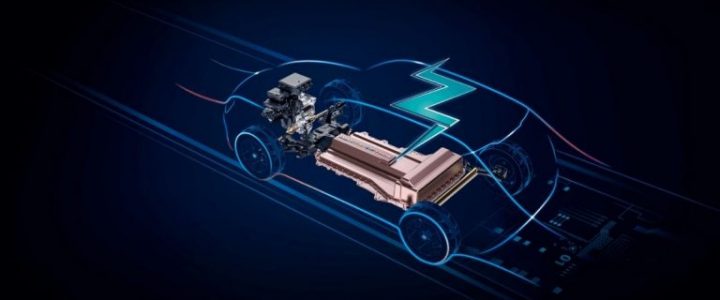
| 2 YEAR | II semester | 6 CFU |
| Cristiano M. Verrelli | A.Y. 2021-22 to A.Y. 2024-25 (Control of Electrical Machines (B-C-E)) |
|
|
A.Y. 2025-26 (new name CONTROL OF ELECTRICAL MOTORS AND VEHICLES ) |
| didatticaweb | |
| ✅ All syllabi📑
Code:8039782 |
 Syllabus
 ICT –
ICT –