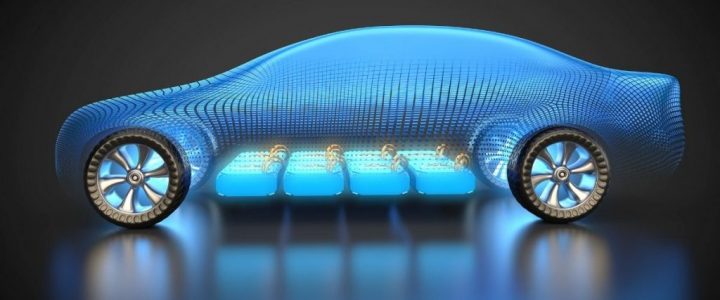
CONTROL OF ELECTRICAL MOTORS AND VEHICLES – 6 CFU (C1-C2-optE)

CEM
2 YEAR II semester 6 CFU
Cristiano M. Verrelli  


A.Y. 2025-26 (ex Control of Electrical Machines (B-C-E)
All syllabi📑
Code:8039782
SSD: ING-INF/04


LEARNING OUTCOMES: The course aims to provide a unified exposition of the most important steps and concerns in mathematical modeling and design of estimation and control algorithms for electrical machines such as:
– permanent magnet synchronous motors
– permanent magnet stepper motors
– synchronous motors with damping windings
– induction (asynchronous) motors
– synchronous generators.

KNOWLEDGE AND UNDERSTANDING: Students should be able to gain profound insight into the fundamental mathematical modeling and control design techniques for electrical machines, which are of interest and value not only to engineers engaged in the control of electric machines but also to a broader audience interested in (nonlinear) control design.

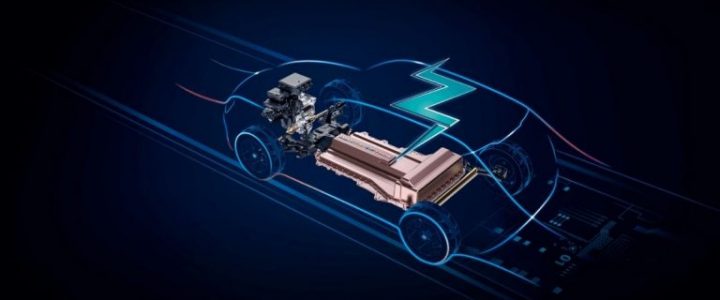
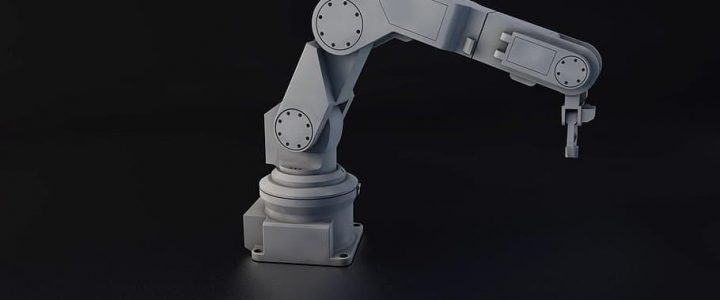
APPLYING KNOWLEDGE AND UNDERSTANDING: Students should be able to deeply understand mathematical modeling through nonlinear differential equations, stability and nonlinear control theory concepts, and design of (nonlinear) adaptive controls containing parameter estimation algorithms (important for applications). Students should be able to apply the related knowledge to learning control of robotic manipulators and cruise/yaw rate control of electric vehicles.

MAKING JUDGEMENTS: Students should be able to identify the specific design scenario and apply the most suitable techniques. Students should be able to compare the effectiveness of different controls while analyzing theoretical/experimental advantages and drawbacks.

COMMUNICATION SKILLS: Students should be able to use a single notation and modern (nonlinear) control terminology. Students should be able to exhibit a logical and progressive exposition starting from basic assumptions, structural properties, modeling, control, and estimation algorithms. Students are also expected to be able to read and capture the main results of a technical paper concerning the topics of the course, as well as to effectively communicate in a precise and clear way the content of the course. Tutor-guided individual projects (including Maple and Matlab-Simulink computer simulations and lab visits) invite intensive participation and exchanging ideas.

LEARNING SKILLS: Being enough skilled in the specific field to undertake the following studies characterized by a high degree of autonomy.

TEXTS

R. Marino, P. Tomei, C.M. Verrelli, Induction Motor Control Design, Springer, 2010.
Latest journal papers.

VERIFICATION OF THE KNOWLEDGE

Verify the knowledge and skills acquired by the student on the topics covered by the program. The intermediate exams, the final written tests, and the oral exam will consist of questions related to the topics covered by the program of the course. The questions are aimed at ascertaining the student’s knowledge and his/her reasoning skills in making logical connections between the different topics.

The final vote of the exam is expressed out of thirty and will be obtained through the following graduation system:

Not pass: important deficiencies in the knowledge and in the understanding of the topics; limited capacity for analysis and synthesis, frequent mistakes and limited critical and judgmental capacity, inconsistent reasoning, inappropriate language.

18-21: the student has acquired the basic concepts of the discipline and has an analytical capacity that comes out only with the help of the teacher. The way of speaking and the language used are almost correct, though not precise.

22-25: the student has acquired the basic concepts of the discipline in a discrete way; he/she knows how to discuss the various topics; he/she has an autonomous analysis capacity while adopting a correct language.

26-29: the student has a well-structured knowledge base. He/She is able to independently adopt a correct logical reasoning;  notations and technical language are correct.

30 and 30 cum laude: the student has a complete and in-depth knowledge base. The cultural references are rich and up-to-date while being expressed by means of brilliant technical language.

CONTROL OF ELECTRICAL MOTORS AND VEHICLES (B-C1-C2-E) (25-26)

CEM
2 YEAR II semester 6 CFU
Cristiano M. Verrelli A.Y. 2021-22 to A.Y. 2024-25 (Control of Electrical Machines (B-C-E))


A.Y. 2025-26 (new name CONTROL OF ELECTRICAL MOTORS AND VEHICLES )
All syllabi📑

Code:8039782
SSD: ING-INF/04


LEARNING OUTCOMES: The course aims to provide a unified exposition of the most important steps and concerns in mathematical modeling and design of estimation and control algorithms for electrical machines such as:
– permanent magnet synchronous motors
– permanent magnet stepper motors
– synchronous motors with damping windings
– induction (asynchronous) motors
– synchronous generators.

KNOWLEDGE AND UNDERSTANDING: Students should be able to gain profound insight into the fundamental mathematical modeling and control design techniques for electrical machines, which are of interest and value not only to engineers engaged in the control of electric machines but also to a broader audience interested in (nonlinear) control design.

APPLYING KNOWLEDGE AND UNDERSTANDING: Students should be able to deeply understand mathematical modeling through nonlinear differential equations, stability and nonlinear control theory concepts, and design of (nonlinear) adaptive controls containing parameter estimation algorithms (important for applications). Students should be able to apply the related knowledge to learning control of robotic manipulators and cruise/yaw rate control of electric vehicles.

MAKING JUDGEMENTS: Students should be able to identify the specific design scenario and apply the most suitable techniques. Students should be able to compare the effectiveness of different controls while analyzing theoretical/experimental advantages and drawbacks.

COMMUNICATION SKILLS: Students should be able to use a single notation and modern (nonlinear) control terminology. Students should be able to exhibit a logical and progressive exposition starting from basic assumptions, structural properties, modeling, control, and estimation algorithms. Students are also expected to be able to read and capture the main results of a technical paper concerning the topics of the course, as well as to effectively communicate in a precise and clear way the content of the course. Tutor-guided individual projects (including Maple and Matlab-Simulink computer simulations and lab visits) invite intensive participation and exchanging ideas.

LEARNING SKILLS: Being enough skilled in the specific field to undertake the following studies characterized by a high degree of autonomy.

TEXTS

R. Marino, P. Tomei, C.M. Verrelli, Induction Motor Control Design, Springer, 2010.
Latest journal papers.

VERIFICATION OF THE KNOWLEDGE

Verify the knowledge and skills acquired by the student on the topics covered by the program. The intermediate exams, the final written tests, and the oral exam will consist of questions related to the topics covered by the program of the course. The questions are aimed at ascertaining the student’s knowledge and his/her reasoning skills in making logical connections between the different topics.

The final vote of the exam is expressed out of thirty and will be obtained through the following graduation system:

Not pass: important deficiencies in the knowledge and in the understanding of the topics; limited capacity for analysis and synthesis, frequent mistakes and limited critical and judgmental capacity, inconsistent reasoning, inappropriate language.

18-21: the student has acquired the basic concepts of the discipline and has an analytical capacity that comes out only with the help of the teacher. The way of speaking and the language used are almost correct, though not precise.

22-25: the student has acquired the basic concepts of the discipline in a discrete way; he/she knows how to discuss the various topics; he/she has an autonomous analysis capacity while adopting a correct language.

26-29: the student has a well-structured knowledge base. He/She is able to independently adopt a correct logical reasoning;  notations and technical language are correct.

30 and 30 cum laude: the student has a complete and in-depth knowledge base. The cultural references are rich and up-to-date while being expressed by means of brilliant technical language.

Mechanics of Materials and Structures – 6 CFU (block A-E)

Mechanics of Materials and Structures – 6 CFU (block A-E)
1 YEAR II semester  6 CFU
Andrea Micheletti

Edoardo Artioli

A.Y. 2021-22 (9 cfu)
Andrea Micheletti A.Y. 2022-23
A.Y. 2024-25 (6 cfu) – 
All syllabi📑

ES – Mechanics of Materials and Structures (MMS)A. Micheletti

Code: 80300064
SSD: ICAR/08
(by Engineering Sciences)

Feedback Control Systems (optE)

Feedback Control Systems (optE)
1 YEAR II semester  6 CFU
Cristiano M. VERRELLI since 2017-18 (Engineering Sciences)
since 2022-23 to 2024-25 (block B)
(Mechatronics Engineering)2025-26 (block optE)
Cristiano M. VERRELLI (4)
Mohamed El Arayshi (2)
2025-26
All syllabi📑

Code: 8039367
SSD: ING-INF/04
DidatticaWeb

FORMATIVE OBJECTIVES

LEARNING OUTCOMES:

The theory of differential equations is successfully used to gain profound insight into the fundamental mathematical control design techniques for linear and nonlinear dynamical systems.

KNOWLEDGE AND UNDERSTANDING:

Students should be able to deeply understand (and be able to use) the theory of differential equations and of systems theory, along with related mathematical control techniques.

APPLYING KNOWLEDGE AND UNDERSTANDING:

Students should be able to design feedback controllers for linear (and even nonlinear) dynamical systems.

MAKING JUDGEMENTS:

Students should be able to identify the specific design scenario and to apply the most suitable techniques. Students should be able to compare the effectiveness of different controls while analyzing theoretical/experimental advantages and drawbacks.

COMMUNICATION SKILLS: Students are expected to be able to read and capture the main results of a technical paper concerning the topics of the course, as well as to effectively communicate in a precise and clear way the content of the course. Tutor-guided individual projects (including Maple and Matlab-Simulink computer simulations as well as visits to labs) invite intensive participation and ideas exchange.

LEARNING SKILLS:

Being enough skilled in the specific field to undertake the following studies characterized by a high degree of autonomy.

SYLLABUS:

The matrix exponential; the variation of constants formula.

Computation of the matrix exponential via eigenvalues and eigenvectors and via residual matrices. Necessary and sufficient conditions for exponential stability: Routh-Hurwitz criterion. Invariant subspaces.

Impulse responses, step responses and steady state responses to sinusoidal inputs. Transient behaviours. Modal analysis: mode excitation by initial conditions and by impulsive inputs; modal observability from output measurements; modes which are both excitable and observable. Popov conditions for modal excitability and observability. Autoregressive moving average (ARMA) models and transfer functions.

Kalman reachability conditions, gramian reachability matrices and the computation of input signals to drive the system between two given states. Kalman observability conditions, gramian observability matrices and the computation of initial conditions given input and output signals. Equivalence between Kalman and Popov conditions.

Kalman decomposition for non-reachable and non-observable systems.

Eigenvalues assignment by state feedback for reachable systems. Design of asymptotic observers and Kalman filters for state estimation of observable systems. Design of dynamic compensators to stabilize any reachable and observable system. Design of regulators to reject disturbances generated by linear exosystems.

Bode plots. Static gain, system gain and high-frequency gain.

Zero-pole cancellation.

STATISTICS:

A.Y.  Mechatronics students Other courses Students Mechatronics average Other courses average
2019/2020 10 62 24 23
2020/2021 19 25 23 24
2021/2022 13 44 21 22

Innovative Materials with Laboratory (blocks C1-E)

Innovative Materials with Laboratory (blocks C1-E)
1 YEAR 1 semester 6 CFU
TATA MARIA ELISA (1cfu)
COSTANZA GIROLAMO (1cfu)
VARONE ALESSANDRA (4cfu)
A.Y. 2020-21 to
A.Y. 2024-25 (B-C1-E)
COSTANZA GIROLAMO (4cfu)

TATA MARIA ELISA (2cfu)

A.Y. 2025-26 (C1-E)
Code: 8039786
SSD: ING-IND/21

LEARNING OUTCOMES:
The aim of the course is to provide an overview of novel materials recently developed and investigated for applications in mechanics, electronics, and mechatronics. Different types of materials are considered and described with particular attention on the preparation route, specific characteristics, and applications. Some of them are of basic importance for new technologies gaining increasing attention in industrial practice. The knowledge of innovative materials is strictly connected to the possibility and capability of designing new products.

KNOWLEDGE AND UNDERSTANDING:
Deep knowledge of the metallic structure and their mechanical behavior; in particular knowledge of innovative materials for mechatronics applications; selection of conventional material or not as a function of application, structure and properties.

APPLYING KNOWLEDGE AND UNDERSTANDING:
Ability to define materials properties and the most suitable production technologies for the components realization; Ability to perform tests in laboratory; Ability to define appropriate treatments in order to obtain the suitable mechanical properties as a function of service conditions. Ability to select innovative materials; ability to evaluate innovative materials properties.

MAKING JUDGEMENTS:
Ability to investigate, select and choose metallic materials as a function of the application.

COMMUNICATION SKILLS:
Clear and correct expression, in English language, skills on the topics covered in the course.

LEARNING SKILLS:

Ability to face a new problem, know how to manage it and find functional and correct solutions. learning ability will be evaluated by exam tests and laboratory activities.

SYLLABUS:

Metallurgy Fundamentals: crystal structure, defects, plastic deformation. Mechanical tests.

Amorphous alloys: production and applications of metallic glasses as mechatronic devices. Alloys with mixed structure (nanocrystalline and amorphous).

Ultrafine grained (UFG) materials: microstructural features and production routes.

Nanoporous and mesoporous materials: structural characterization and properties. Their applications for energy and gas storage.

Powder metallurgy, Additive Manufacturing Technologies.

Advanced composite materials: properties, applications and production routes.

Porous materials: metal foams, Open and closed porosity (micro and macro). Classification according to size and shape of the pores. Properties (sound, energy and vibration absorption, crash

behavior) and production methods. Functional and structural

applications: lightweight construction, automotive. Metal sandwich structures.

Functional and Smart Materials. Property change as a response of external stimulus: shape memory alloy (one-way and two-way shape memory), thermochromic, photomechanical. Energy conversion: piezoelectric, thermoelectric. Phase change materials. 

Applications: mechatronic, energy. Functionally graded materials.