Analogue Electronics – 9 CFU (block B-opt)

Analogue Electronics – 9 CFU (block B-opt)
PROFESSOR 1 Year – II semester  6 CFU + 3 cfu extra
Rocco Giofre’ A.Y. 2021-22 to A.Y. 2022-23
Paolo Colantonio since A.Y. 2023-24
👉(provided by Engineering Sciences) 

 🧩 Block: B – Electronics

📌 Course Code: 8037954 (9CFU)

🏷 SSD2015: ING-INF/01
🏷 SSD2024:

📑 Grading criteria

https://t0.gstatic.com/faviconV2?client=SOCIAL&type=FAVICON&fallback_opts=TYPE,SIZE,URL&url=https://didatticaweb.uniroma2.it&size=32  DidatticaWeb

Students who include Analogue Electronics in their study plan are strongly advised to take it in its 9-CFU version, with the last 3 CFUs (out of 9) serving as Extra Credits.


✅ Syllabus📑

  1. Classification of electrical systems and requirements.

  2. Analysis of transitory and frequency behavior.

  3. Distortion in electronic systems and Bode diagrams.

  4. Diode semiconductor devices and circuit applications: clipper, clamper, peak detector, etc.

  5. Bipolar Junction and Field Effect Transistors.

  6. Biasing techniques for Transistors.

  7. Amplifiers classification, analysis and circuit design.

  8. Differential amplifiers and Cascode.

  9. Current mirrors.

  10. Frequency response of single and cascaded amplifiers.

  11. Feedback amplifiers and stability issues.

  12. Power amplifiers.

  13. Operational amplifiers and related applications.

  14. Integrated circuits and voltage waveform generators.

  15. Oscillator circuits.

NANOTECHNOLOGY – 6 CFU

NANOTECHNOLOGY – 6 CFU
1 YEAR II semester  6 CFU
Antonio Agresti (3cfu)
Francesca De Rossi (3cfu)
A.Y. 2021-22
Antonio Agresti (3cfu)
Fabio Matteocci (3cfu)
A.Y. 2022-23
A.Y. 2023-24
Antonio Agresti (5cfu)

Sara Pescetelli (1cfu)

A.Y. 2024-25
A.Y. 2025-26

didatticaweb
 ✅ Syllabus📑

Code: 8039791
SSD: ING-INF/01


VLSI CIRCUIT AND SYSTEM DESIGN – 9 CFU

VLSI
PROFESSOR 1st Year – II semester  9 CFU
Luca DI NUNZIO (9 cfu) A.Y. 2021-22
Luca DI NUNZIO (5 cfu)

Vittorio MELINI (2 cfu)

Sergio SPANO’ (2 cfu)

since A.Y. 2022-23 to 2024-25
Alessia DI VITO (7 cfu)

Gemma GILIBERTI (2 cfu)

since A.Y. 2025-26 


👉(provided by Mechatronics Engineering) 

 🧩 Block: ALL

📌 Course Code: 8039166 (9CFU)

🏷 SSD2015: ING-INF/01
🏷 SSD2024: IINF-01/A 

📑 Grading criteria

https://t0.gstatic.com/faviconV2?client=SOCIAL&type=FAVICON&fallback_opts=TYPE,SIZE,URL&url=https://didatticaweb.uniroma2.it&size=32  DidatticaWeb

Syllabus

Course Description: VLSI Systems Design
This course provides the methodological and practical skills required for the design of complex digital systems, ranging from theoretical foundations to implementation on programmable logic devices. The program is structured into two integrated modules.

Module 1: Digital Systems and Architectures (7 ECTS)

This module introduces the principles of digital electronics and circuit synthesis methodologies.
Foundations of Digital Electronics: Course introduction; Boolean algebra and expression minimization techniques (SOP canonical forms and Karnaugh maps).
Combinational Logic Circuits: Analysis and design of standard functional blocks (adders, subtractors, comparators, encoders/decoders, multiplexers/demultiplexers, shifters, and multipliers).
Sequential Logic and Digital Systems: Study of memory elements (latches, flip-flops) and design of registers, counters, and Finite State Machines (FSMs). Design considerations and integration of building blocks for digital systems.
Programmable Logic Devices: Overview and architecture of programmable devices (PROM, PLA, PAL, CPLD, and FPGA).

Module 2: VHDL Design and Simulation (2 ECTS)

This module provides the practical tools for hardware description and verification.
VHDL Language: Introduction to the fundamental constructs of the language for digital system modeling.
Simulation and Design: Methodologies for the design and functional verification of digital systems through simulation tools.
Final Project: Development of a digital design project to be presented during the final examination.

updated: 24/04/2024

Feedback Control Systems (optE)

Feedback Control Systems (optE)
1 YEAR II semester  6 CFU
Cristiano M. VERRELLI since 2017-18 (Engineering Sciences)
since 2022-23 to 2024-25 (block B)
(Mechatronics Engineering)2025-26 (block optE)
Cristiano M. VERRELLI (4)
Mohamed El Arayshi (2)
2025-26
DidatticaWeb
✅ Syllabus📑

Code: 8039367
SSD: ING-INF/04

FORMATIVE OBJECTIVES

LEARNING OUTCOMES:

The theory of differential equations is successfully used to gain profound insight into the fundamental mathematical control design techniques for linear and nonlinear dynamical systems.

KNOWLEDGE AND UNDERSTANDING:

Students should be able to deeply understand (and be able to use) the theory of differential equations and of systems theory, along with related mathematical control techniques.

APPLYING KNOWLEDGE AND UNDERSTANDING:

Students should be able to design feedback controllers for linear (and even nonlinear) dynamical systems.

MAKING JUDGEMENTS:

Students should be able to identify the specific design scenario and to apply the most suitable techniques. Students should be able to compare the effectiveness of different controls while analyzing theoretical/experimental advantages and drawbacks.

COMMUNICATION SKILLS: Students are expected to be able to read and capture the main results of a technical paper concerning the topics of the course, as well as to effectively communicate in a precise and clear way the content of the course. Tutor-guided individual projects (including Maple and Matlab-Simulink computer simulations as well as visits to labs) invite intensive participation and ideas exchange.

LEARNING SKILLS:

Being enough skilled in the specific field to undertake the following studies characterized by a high degree of autonomy.

SYLLABUS:

The matrix exponential; the variation of constants formula.

Computation of the matrix exponential via eigenvalues and eigenvectors and via residual matrices. Necessary and sufficient conditions for exponential stability: Routh-Hurwitz criterion. Invariant subspaces.

Impulse responses, step responses and steady state responses to sinusoidal inputs. Transient behaviours. Modal analysis: mode excitation by initial conditions and by impulsive inputs; modal observability from output measurements; modes which are both excitable and observable. Popov conditions for modal excitability and observability. Autoregressive moving average (ARMA) models and transfer functions.

Kalman reachability conditions, gramian reachability matrices and the computation of input signals to drive the system between two given states. Kalman observability conditions, gramian observability matrices and the computation of initial conditions given input and output signals. Equivalence between Kalman and Popov conditions.

Kalman decomposition for non-reachable and non-observable systems.

Eigenvalues assignment by state feedback for reachable systems. Design of asymptotic observers and Kalman filters for state estimation of observable systems. Design of dynamic compensators to stabilize any reachable and observable system. Design of regulators to reject disturbances generated by linear exosystems.

Bode plots. Static gain, system gain and high-frequency gain.

Zero-pole cancellation.

STATISTICS:

A.Y.  Mechatronics students Other courses Students Mechatronics average Other courses average
2019/2020 10 62 24 23
2020/2021 19 25 23 24
2021/2022 13 44 21 22

POWER ELECTRONICS AND ELECTRICAL DRIVES – 9 CFU

POWER ELECTRONICS AND ELECTRICAL DRIVES – 9 CFU
2 YEAR 2 semester 9 CFU
Stefano Bifaretti
A.Y. 2021-22
Stefano Bifaretti (7cfu)

Cristina Terlizzi (2cfu)

A.Y. 2022-23 1st Year I semester
A.Y. 2023-24  (NOT HELD)
A.Y. 2024-25
Stefano Bifaretti A.Y. 2025-26

MECHA – Power Electronics and Electrical Drives (PEED) S. Bifaretti

✅ Syllabus📑

Code: 8039781
SSD: ING-INF/01


ROBOT MECHANICS – 9 CFU

ROBOT MECHANICS – 9 CFU
1 YEAR (Blocks B|C)24-25
2 YEAR (Blocks A|D|E)24-25 (All)25-26
1 semester 9 CFU
Marco Ceccarelli (6/9 cfu)

Matteo Russo (3/6 cfu)

A.Y. 2021-22

A.Y. 2022-23

Matteo Russo (9cfu)
since A.Y. 2023-24

MECHA – Robot Mechanics (ROM)M. Russo

didatticaweb
Syllabus📑

Code: 8039785
SSD: ING-IND/13

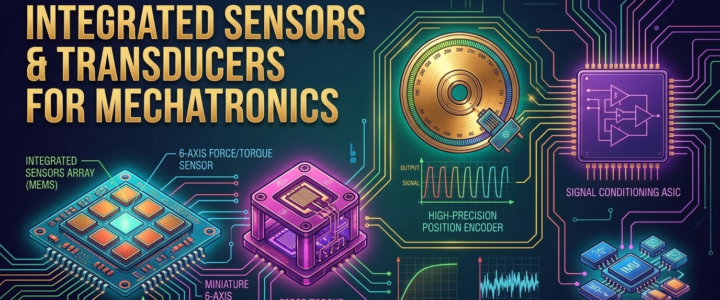
INTEGRATED SENSORS – 9 CFU

INTEGRATED SENSORS – 9 CFU
1 YEAR (ALL) 25-26
2 YEAR (Block B)24-25
1 semester 9 CFU
Corrado Di Natale A.Y. 2019-20 (new name, ex Electronic Devices and Sensors)
Alexandro Catini (6cfu)
Corrado  Di Natale (3cfu)
A.Y. 2022-23
A.Y. 2023-24
Alexandro Catini (8cfu) – catini@ing.uniroma2.it
Corrado  Di Natale (1cfu) 
A.Y. 2024-25

MECHA – Integrated Sensors (IS)A. Catini – C. Di Natale

didatticaweb
Syllabus📑

Code: 8039927
SSD: ING-INF/01


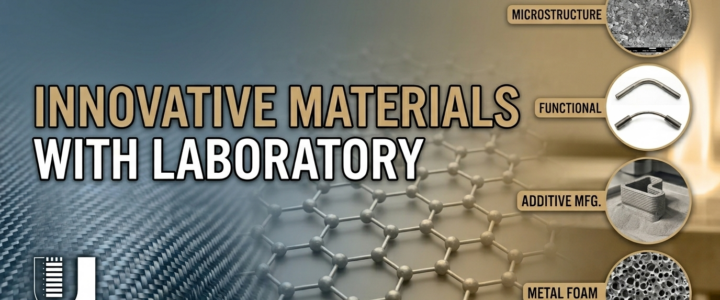
Innovative Materials with Laboratory (blocks C1-E)

Innovative Materials with Laboratory (blocks C1-E)
PROFESSOR  1 Year – 1 semester 6 CFU
TATA MARIA ELISA (1cfu)
COSTANZA GIROLAMO (1cfu)
VARONE ALESSANDRA (4cfu)
A.Y. 2020-21 to A.Y. 2024-25 (B-C1-E)
COSTANZA GIROLAMO (4cfu)

TATA MARIA ELISA (2cfu)

A.Y. 2025-26 (C1-E)
 👉(provided by Mechatronics Engineering) 
 🧩 Block: C1 – E

📌 Course Code: 8039786

SSD2015: ING-IND/21
SSD2024: IIND-03/C 

 📑 Grading criteria

 https://t0.gstatic.com/faviconV2?client=SOCIAL&type=FAVICON&fallback_opts=TYPE,SIZE,URL&url=https://didatticaweb.uniroma2.it&size=32 didaticaweb

Syllabus

Prof. COSTANZA (4/6 CFU)
Metallurgy Fundamentals: crystal structure, defects, plastic deformation. Mechanical tests.
Ultrafine grained (UFG) materials: microstructural features and production routes.
Shape memory alloys. One way and Two way shape memory effect. Shape setting and training.
Nanoporous and mesoporous materials: structural characterization and properties.
Functional and Smart Materials. Property change as a response of external stimulus: thermochromic, photomechanical. Energy conversion: piezoelectric, thermoelectric, photoluminescent. Phase change materials . Functionally graded materials.
Powder metallurgy, Additive Manufacturing Technologies.
Advanced composite materials: properties, applications and their production routes.

Prof. TATA (2/6 CFU)
Amorphous alloys: production and applications of metallic glasses as mechatronic devices. Alloys with mixed structure (nanocrystalline and amorphous).
Porour materials: metal foams, open and closed-porosity (micro and macro). Classification according to size and shape of the pores. Properties (sound, energy and vibration absorption, crash behavior) and production methods. Functional and structural applications: lightweight construction, automotive. Metal sandwich structures.